What is title fraud and how do you stop it?

Written by Seamus McKale

Updated November 27, 2025 | Published November 27, 2025

Title fraud is a crime in which someone steals a homeowner’s identity to sell their home and pocket the proceeds.

While title fraud is not widespread, it does happen — and the consequences can be devastating. Title fraud is related to mortgage fraud; the two often occur at the same time.

This article describes how title fraud works, how to protect yourself against it, and what to do if you’re a victim.

A key dangling above several small plastic red and black houses

The important points

  • Title fraud is a crime wherein a fraudster steals a homeowner’s title to their home, usually followed by selling it and pocketing the proceeds.
  • Title fraud is almost always preceded by identity theft, because the fraudster must impersonate the homeowner to succeed.
  • Title insurance protects against, among other things, title fraud.

What is title fraud?

Title fraud (or title theft) is when a fraudster steals a homeowner’s title to their home. The title is essentially the legal term for “ownership.” Title fraud can happen with any form of real estate, including houses, townhouses, condos, and even empty land.

To accomplish title fraud, the perpetrator usually has to steal a homeowner’s identity. Once they’ve done so, they impersonate the homeowner and sell their home.

Title fraud is usually accomplished through identity theft.

They may also attempt to take out a mortgage against the home (a form of mortgage fraud).

“They can both end up being the same thing, in a lot of cases,” Everything Financial’s Peter Cishecki said to CTV Morning Live. “Someone will go and take a mortgage out on your house. That’s the first step. So they actually borrow money, and you’re responsible for the debt. That’s the mortgage fraud part of it.

“Title fraud goes one step further, where now they own your house.”1

A victim of title theft no longer has a clear legal title to their home. That means, at minimum, they can’t sell it or leverage their equity in it until their title is re-established. It is expensive and time-consuming to unwind an instance of title theft.2

Title fraud isn’t widespread in Canada, but it is on the rise. Mortgage fraud, in which a fraudster impersonates a homeowner to obtain a mortgage on their home and pocket the money, is more common.3

How to protect yourself from title fraud

Protect your identity

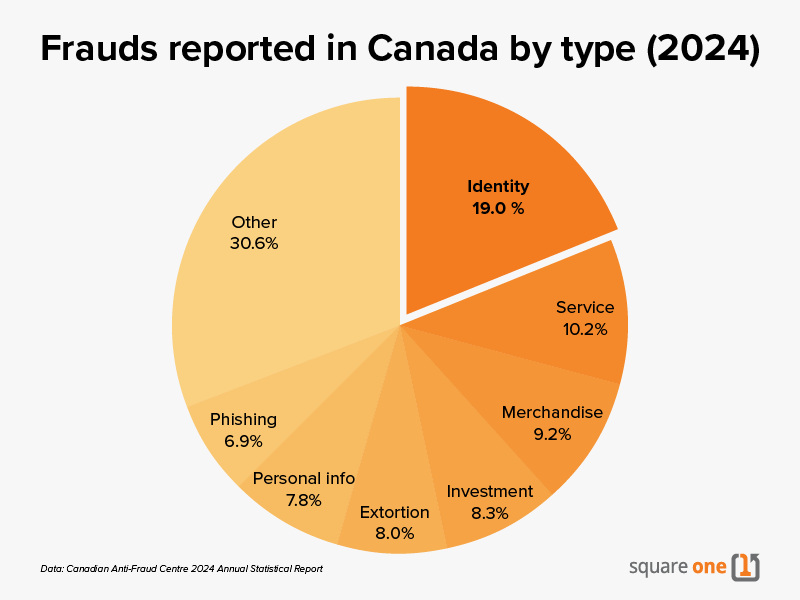
First and foremost, protect yourself from identity theft. Identity theft is the first step in title fraud, as the fraudster must impersonate the property owner to commit the crime. Identity theft is a serious problem in Canada, with nearly 10,000 cases reported to the Canadian Anti-Fraud Centre in 2024, accounting for 19% of all reported fraud cases.4
To protect yourself, be wary of who you share personal information with. If you have any documents with personal information, don’t just toss them in the trash — shred them.

Limit strangers’ access to your mail by picking it up often (or opting for electronic document delivery wherever possible). If you move, tell the post office and all of your financial institutions immediately.

Keep an eye on your bank accounts and credit reports for any suspicious activity, and report it immediately if you see it.

Related articles

Take care when you buy a home

When you’re buying a new home and getting a mortgage, deal only with licensed or accredited professionals — no sketchy corner-cutting to save a dollar. Read everything before you sign it, and keep all your documentation securely stored.

Pay attention to the people you’re dealing with, including the original seller. You should be confident that everyone involved in the transaction is who they claim to be and has a genuine legal right to sell the property.

Keep a lien on your home

Title fraudsters are more likely to target a home that has no liens on it — that is to say, the mortgage is paid off, and there are no lines of credit registered against it.

Lien-free homes are more attractive targets for title fraud than homes with active mortgages or secured loans against them.

When there’s a lender with an interest in the house, that interest will show up during the process of the fraudster trying to push through the sale or take out a mortgage of their own. Though not foolproof, this at least offers an extra layer of protection. If the house is paid off, a lender might not notice anything amiss when the fraudster approaches them.

“There’s no mortgage or line of credit or anything attached to the title of your house, and that exposes you and makes it easier [for the fraudster] to gain access to a mortgage, gain access to your title,” said Cishecki. “One of the easiest ways to avoid it is the simplest thing. Put a home equity line of credit on your house, so you’re registering a debt.”1

You don’t actually have to use the line of credit, either. As long as it’s registered and open, it will show up as a lien on the house, even with a balance of zero.

Know who’s in your home

To succeed at title fraud, fraudsters will usually need access to the house at some point. Throughout the selling process, they may need appraisers, realtors, or prospective buyers to visit. For that reason, vacant and unoccupied properties are targets.

If you’re going to be away for an extended period, make sure you have someone trustworthy checking in regularly.

For landlords, it’s imperative to thoroughly screen tenants. While it’s very unlikely that any given tenant is going to participate in title fraud, you need to be able to trust the residents of your rental property.

Set up alerts

There are many ways you can proactively monitor warning signs of title fraud. For example, the credit reporting bureaus offer credit monitoring services, which will tip you off if there are any changes in your credit report.

Even setting up a Google alert for your home address can help — you should get a notice if it suddenly appears in real estate listings.

Get title insurance

Title insurance protects homeowners against losses relating to their title. Let’s take a closer look.


It only takes 5 minutes

ready for an online quote? Your time matters, and so does your stuff. Get a personalized home insurance quote in 5 minutes. That’s less time than it takes to wait in line for coffee.

Before you start, please review our Privacy Policy and Terms of Use.

Title insurance

Note: Square One does not offer title insurance.

Title insurance is a type of coverage that protects real estate owners from losses relating to their legal ownership of a property.

Of course, that does include cases of title fraud. Title insurance would cover costs (including legal fees) associated with re-establishing a clear title over your property.

But title insurance also helps with other potential issues. Any situation in which you have to clarify or defend your legal title can fall under title insurance. It also covers off-title issues, which might arise from things like:

  • Encroachment issues, like a structure on your property extending onto a neighbouring property or an easement.
  • Bylaw non-compliance, like if you unknowingly buy a home that’s had renovations done without permits (or otherwise breaks local bylaws).
  • Tax arrears, if you’ve purchased a home for which the previous owner still owed property taxes.

There are actually two types of title insurance: owner title insurance and lender title insurance. Owner title insurance is the one you buy to protect yourself, whereas lender title insurance protects your mortgage lender as far as their interest in the property goes. Basically, up to the outstanding amount of the mortgage.

Most lenders require lender title insurance (at the homeowner’s expense), but owner title insurance is totally optional. Of course, it’s still a very good idea — title insurance isn’t expensive, and it’s a one-time payment for coverage that lasts as long as you own the property.

The cost of home title insurance is based on several factors, including the property value, the province, and the type of mortgage lender (private vs. institutional). Most reports place title insurance pricing between $250 and $1,000.

What to do if you’re a victim of title fraud

The signs you may be experiencing title fraud include:

  • Receiving communications about a mortgage or other loan that you aren’t aware of and didn’t authorize.
  • Receiving foreclosure notices even though your mortgage payments are up to date.
  • No longer receiving typical bills (particularly property tax or utility bills), or receiving bills with incorrect contact information.
  • Contact from realtors or other real estate professionals, or your home being listed for rent or sale.
  • Unusual items appearing on your credit report.

If you suspect you’ve been a victim of title fraud, take these steps:

  1. Write down every detail you can remember that might be relevant: when you noticed, what you did, who you spoke with, and when.
  2. File a police report (and note the case number you’re assigned).
  3. File a report with the Canadian Anti-Fraud Centre.
  4. If you have title fraud insurance or identity theft insurance, contact your insurance provider.
  5. Contact your financial institutions.
  6. Contact TransUnion and Equifax to put a fraud alert on your credit report.
  7. Contact your provincial land title office.

Once you’ve reported the incident, follow any directions given to you by each agency. They will be able to provide advice specific to your situation.

Commonly asked questions

Does homeowner’s insurance cover title fraud?

Home insurance does not cover losses resulting from title fraud. That’s why it’s recommended that homeowners buy title insurance, even though it’s optional.

However, home insurance policies from Square One can have identity theft coverage added. Since title theft is usually preceded by identity theft, it’s helpful to stop identity theft incidents quickly and decisively.

Is home title theft a problem in Canada?

Successful incidents of title theft are, thankfully, relatively rare in Canada.

For example, two homes in BC were known to have been fraudulently sold between 2019 and 2020, with a third in 2021 stopped before the sale was finalized.5 Another high-profile fraudulent sale took place in Toronto in 2023.6

Of course, there may be many more attempts at title fraud that are discovered before the sale is complete, or that go unreported. There is also mortgage fraud, which is more common than title fraud.3

Can someone steal your house without you knowing?

It is possible that someone could steal your house through title fraud without you noticing. While there are typically some warning signs, like fraudulent activity on your credit report or a real estate listing for your house, most people don’t monitor such things.

That’s why it’s so important to stay vigilant about identity theft. Any suspicious activity that could indicate identity theft should be thoroughly investigated and addressed.

Sources

  1. “Mortgage and Title Fraud On the Rise.” CTV Morning Live, hosted by Keri Adams, CTV Vancouver, 21 May 2025. www.ctvnews.ca/vancouver/video/2025/05/21/mortgage-and-title-fraud-on-the-rise.
  2. CBC News. “How to Protect Yourself from Real-Estate Title Fraud.” CBC News, 13 January 2023, www.cbc.ca/news/canada/toronto/prevent-title-insurance-fraud-1.6711615.
  3. Feinstein, Clarrie. “Title Fraud is on the Rise — Here Are Four Ways to Stop Criminals From Selling Your House Out From Under You.” Toronto Star, 30 January 2023, www.thestar.com/business/title-fraud-is-on-the-rise-here-are-four-ways-to-stop-criminals-from-selling/article_0c2f917a-a5fe-5f7f-8b5f-77fdeb038b1e.html.
  4. Canadian Anti-Fraud Centre. “Canadian Anti-Fraud Centre’s Annual Report.” open.canada.ca, 24 October 2025, open.canada.ca/data/en/info/69c68f22-8a2a-43d1-8f4e-4017e3ffebba/resource/1ffc4a5e-e41b-48c7-929e-633d023ef8dc.
  5. Ghoussoub, Michelle. “At Least 3 B.C. Homes Listed for Sale Without Homeowners’ Knowledge Amid Surge in Title Fraud in Ontario.” CBC News, 1 February 2023, www.cbc.ca/news/canada/british-columbia/mortgage-fraud-bc-homes-1.6732176.
  6. CBC News. “Toronto Police Seek Public’s Help After House Sold Without Owners’ Consent.” CBC News, 5 January 2023, www.cbc.ca/news/canada/toronto/toronto-police-mortgage-fraud-investigation-1.6704719.

Want to learn more? Visit our Home Buying, Selling and Moving resource centre for everything you need to know about real estate, buying a home, or moving. Or, get an online quote in under 5 minutes and find out how affordable personalized home insurance can be.

Computer

Get a free quote

Get a personalized online home insurance quote in just 5 minutes and see how much money you can save by switching to Square One.

Get an online quote now

People

Protect your family

Even when you take precautions, accidents can happen. Home insurance is one way to protect your family against financial losses from accidents. And, home insurance can start from as little as $15/month.

Learn more
