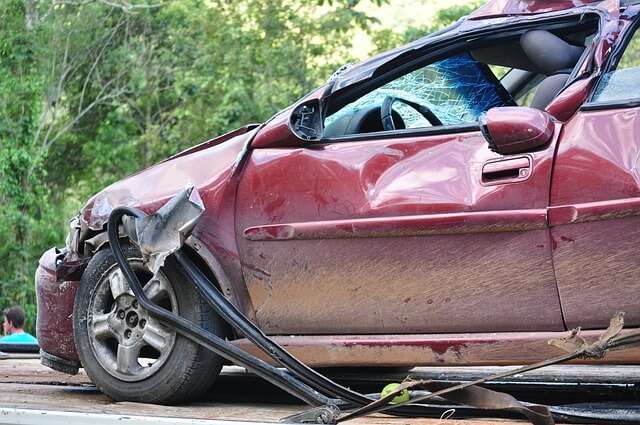
The first moments after a car accident are stressful and often disorienting. For now, the most important thing is ensuring the safety of drivers, passengers, and pedestrians involved.
1. Check for injuries
The first thing you need to do is determine whether anyone is injured. If anyone at the accident scene is hurt, call 9-1-1 immediately and follow the operator’s direction.
Even minor injuries may be more serious than they appear, so don’t hesitate to call emergency responders. Even if someone appears physically unhurt, they may have suffered a head injury. If anyone is feeling disoriented, dizzy, or shows similar symptoms of a head injury, call 9-1-1.
Don’t move anyone who is injured. Wait for emergency responders to arrive, and follow the directions given by the 9-1-1 operator.
2. Make sure everyone’s safe
If no one is injured, the next step is to make the accident scene as safe as possible.
- Stand to the side of the road, and make sure everyone else does the same.
- If the vehicles are safe to drive, move them to the road shoulder. If it’s not possible or safe to move them, turn on hazard lights and set up visibility cones or flags (if possible).
- Move any large debris off the road if it’s safe to do so.
What to do after you’ve ensured everyone’s safety
1. Record details of the accident
If everyone’s safe and you’ve done your best to clear the road, get as much of the information below as possible.
- Collect information from other drivers involved in the accident:
- Name
- Address
- Phone number
- Driver’s license number
- Insurance information (provider, policy number)
- Collect information about other vehicles involved in the accident:
- License plate number
- Make, model, and colour
- Take photos of the accident scene and all involved vehicles.
- Collect contact information from any witnesses at the scene.
- If police are present at the scene, ask for a police report number.
While you’re documenting the accident, don’t waste energy discussing or arguing with others at the scene about whose fault it was. Certainly, don’t admit that it was your fault, even if you know it was.
For one, admitting fault (even accidentally or implicitly) can lead to issues down the road if the incident ends up in a courtroom. For two, each province has clear, comprehensive rules about fault determination in vehicle accidents. You can let legal authorities or insurance companies sort out the fault later — your job at this point is collecting information.
2. Report the accident if required
If no one has contacted 9-1-1 or the police, contact police under the following circumstances:
- You suspect any involved drivers to be under the influence of drugs or alcohol.
- Any involved driver does not have a valid driver’s license, vehicle registration, or insurance.
- An involved driver has fled the scene without identifying themself (a hit-and-run).
Some provinces have additional reporting requirements following a vehicle accident.
In Alberta:
If the total damage to all vehicles appears to be greater than $5,000, you must visit a police station and file a collision report. Take note of the file number when you do. Repair shops aren’t permitted to start collision repairs unless the vehicle has a damage sticker indicating that it’s been reported.
In Ontario:
If the total damage to all vehicles appears to be greater than $5,000, you must contact police from the accident scene. It’s best to err on the side of caution here; if you’re not sure whether the damage totals more than $5,000, contact police.
If the total damage is less than $5,000, you must report the accident to a collision reporting centre within 24 hours.
In Quebec:
If there are no police present at the scene, you and the other involved drivers will need to complete a joint report.
3. Contact your insurance provider
As soon as you’re able following the accident, report the incident to your car insurance provider.
Square One customers can report claims online from their account or by calling 1.855.331.6933.
Your insurance provider will guide you through the post-accident process, including helping arrange for a tow truck if necessary. They will collect information about the accident, including police report numbers, witness contact information, photos, and other facts of the case.
Your adjuster will explain how your coverage works. They’ll inform you what’s covered and what’s not, any deductible you may need to pay, and whether you’re eligible for a temporary replacement vehicle. They’ll also help you find an auto shop and get the repair process started.
For more information on the car insurance claim process at Square One, visit this page.
Commonly asked questions
What’s the first thing you should do after being in an accident?
The most important thing to do in the immediate aftermath of an accident is check for injuries and ensure everyone’s safety.
If there are any injuries, even apparently minor ones, call 9-1-1 immediately. Though someone may appear physically unhurt, they could have suffered a head injury. Don’t attempt to move anyone who’s injured.
If you’re sure everyone’s okay, make the accident scene safe by moving vehicles to the side of the road if possible. Turn on hazard lights and set up visibility cones or flags if you have them. If there are any large pieces of debris on the road, move them aside.
Which details should you record after an accident?
Following a car accident, you should collect personal information for each driver involved. That includes their name, address, phone number, and driver’s licence number. Get the licence plate numbers for each vehicle, and a description of each (the year, make, and model at least).
Take photos of the scene and of each vehicle.
If there are any witnesses at the scene, get their contact information. If police are present, ask them for a report number.
When do you need to report a car accident to police?
Call 9-1-1 immediately if anyone is injured, whether a driver, passenger, or pedestrian.
You should also contact police if you suspect an involved driver was under the influence of alcohol or drugs, had no driver’s licence or insurance, or if they fled the scene without identifying themselves.
In Ontario, drivers must inform police as soon as possible if the total damage to all involved vehicles appears to be greater than $5,000.
Want to learn more? Visit our Car insurance resource centre for dozens of helpful articles. Or, get an online car insurance quote in under 5 minutes and find out how affordable personalized coverage can be.
About the expert: Daniel Mirkovic
A co-founder of Square One with 25 years of experience in the insurance industry, Daniel was previously vice president of the insurance and travel divisions at the British Columbia Automobile Association. Daniel has a bachelor of commerce and a Master of Business Administration (MBA) from the Sauder School of Business at the University of British Columbia. He holds a Canadian Accredited Insurance Broker (CAIB) designation and a general insurance license level 3 in BC, Alberta, Saskatchewan, Manitoba and Ontario.