Common parking questions, answered

Written by Seamus McKale

Reviewed by Jil McIntosh

Updated September 11, 2025 | Published September 10, 2025

Parking is an important aspect of driving — you can’t not park your car, unless you plan to stay behind the wheel 24/7.

In this guide, we’ve collected and answered some of the most common parking questions. Whether you’re wondering about parking space bylaws or how to parallel park correctly, you’ll find the answers below.

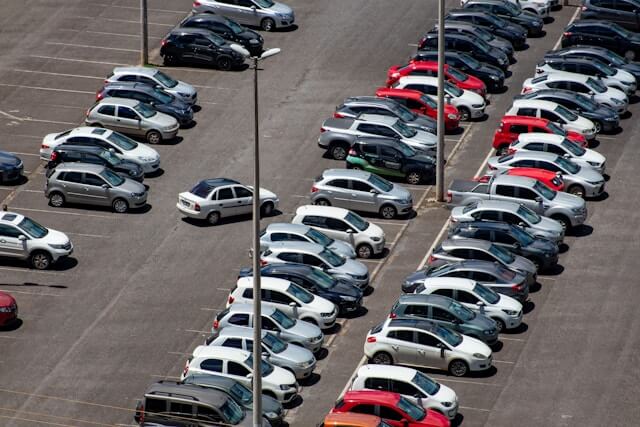
Wide, high-angle shot of a parking lot with many vehicles

Parking space questions

How wide is a standard parking space?

In Canada, there is no universal parking space size. Parking spaces are mostly regulated by municipal bylaws, so they vary from town to town.

Most standard parking spaces average 5.5–5.6 metres long and 2.5–2.7 metres wide. Local bylaws usually stipulate only minimum parking space sizes; they could be longer or wider. For example, Vancouver’s standard parking space minimum is 5.5 by 2.5 metres, while Toronto’s is 5.6 by 2.6 metres.1 2 Minimum space widths encourage safer parking, as they make it easier to enter and exit the space without bumping other vehicles. Wide spaces also improve a driver’s field of view when parking.

There are also special sizes, like compact or oversized parking spaces. A typical compact parking space is about 4.6 by 2.5 metres. Oversized spaces vary, and aren’t specified in many places. But, for example, Edmonton’s bylaws give 6.2 by 2.9 metres as the size of an oversized parking space.3

And, of course, there are also disability parking spaces, which are wider to accommodate easier entry and exit from the vehicle. In Vancouver, disability spaces must be at least 3.7 metres wide, while in Toronto, they must be 3.4 metres wide.4 5

Most bylaws also require that parking spaces be wider if they’re obstructed on one or both sides by a post, wall, or other obstacle. The extra width makes it safer to enter the parking space without bumping adjacent obstacles or vehicles.

Can my landlord take away my parking space?

If a parking space is part of the written tenancy agreement between a landlord and a tenant, the landlord usually can’t just take it away. While tenants’ rights vary between provinces, there are restrictions on how a landlord may revoke a parking space that’s part of the lease agreement.

For example:

  • In BC, a parking space that’s included in the agreement may be revoked with 30 days’ notice from the landlord and a corresponding reduction in the rent. If the space is noted as material to the agreement, it can’t be revoked at all.6
  • In Ontario, if a parking spot is specified in the lease, the landlord must amend the lease in order to revoke the parking spot. The rent should be reduced accordingly. If the landlord doesn’t offer a reduction, the tenant can apply to the Landlord and Tenant Board to have it applied.7
  • In Quebec, landlords cannot revoke your parking space without changing the lease. The landlord must provide a signed and dated notice of the proposed changes, along with how long you’re given to reply. Within that time, you can refuse the changes, and the landlord will have to apply to the Tribunal administratif du logement for a ruling.8
  • If there’s no written agreement about parking spaces between the landlord and tenant, the tenant may not have any recourse if their landlord revokes access to a parking spot.

Renting your parking space

If you have an extra parking space that you want to rent out for some extra cash, carefully review your local bylaws; some municipalities restrict this practice. Most condo properties restrict or outlaw the rental of parking spaces to outside parties. However, you may be allowed to rent your space to another resident of the same property — check your condo bylaws.

If you do rent out a space on your property to someone else for parking, make sure you have a written agreement in place with the renter.

And, speak with your home insurance provider. Driveway rental could be seen as a business and may not be permitted under your policy terms. After all, a stranger coming and going from your property could raise premises liability concerns at the very least.

How much should I charge for renting my parking space?

If you’ve confirmed that you’re allowed to rent out your parking space, you’ll need to do some local research to decide on the price. Parking prices vary significantly between cities and neighbourhoods — like any product, it’s supply and demand. The main factors determining the price are:

  1. How many people want to park in your neighbourhood?
  2. How many acceptable parking spots are currently available?

To see what your local parking market is like, check classifieds on sites like Facebook Marketplace, Kijiji, or Craigslist. See what parking spots are going for in your area, and price yours appropriately. If you’re planning to offer short-term parking rentals (like for events) you may be able to get away with higher prices than those listed online for long-term parking.

Parking prices are trending upward; the average price of 2-hour parking in Canada rose nearly 2% between 2019 and 2022, making Canada the eighth most expensive country in the world for parking.9

It only takes 5 minutes

ready for an online quote? Your time matters, and so does your stuff. Get a personalized home insurance quote in 5 minutes. That’s less time than it takes to wait in line for coffee.

Before you start, please review our Privacy Policy and Terms of Use.

Parking tips and tricks

What type of parking space should you choose?

When you pull into a parking lot, the best strategy for getting parked safely and efficiently is to pick a spot relatively quickly. While parking close to the building may save some walking, the time spent driving up and down the lanes looking for a perfect spot usually wastes more time than if you picked a less-busy section of the lot sooner.10

Plus, avoiding high-traffic sections of the lot reduces the chances of someone damaging your car in a tight spot. Look for parking spaces on corners or ends of parking lanes. Limiting the number of neighbouring vehicles reduces the chance of damage from a parking lot accident.

If you can find a pull-through parking spot, take it — this allows you the best visibility as you enter and exit the spot. Backing into a spot is also safer than nosing in, as you maintain a wider field of vision while entering and exiting.11

If covered parking is available, it’s better than open-air parking. Covered lots protect your vehicle from the weather, not to mention bird droppings or anything else that might fall on it. Plus, parking in the shade helps avoid the oven-like temperatures of a car left in the summer sun. Many covered lots have security cameras or other safety features to deter thieves and vandals, too.

What are the pros and cons of garage parking?

There are very few downsides to parking your car in a garage if you have that option. The main downside is that parking in a garage often costs money. That’s true whether you’re renting a monthly spot in your condo property or paying for a few hours of parking at the mall.

Despite the probable cost, parking indoors has several upsides compared to open-air parking:

  • Protects your car from break-ins, theft, weather, and vandalism
  • Saves you time by eliminating snow and ice clearing in the winter
  • (Usually) allows you to park closer to where you want to be
  • Keeps your vehicle’s interior warmer in the winter and cooler in the summer

How much space should you leave when parallel parking?

When selecting a parallel parking spot, find the longest open space you can. The longer the space, the more room you’ll have to enter and exit the spot easily, avoiding accidental bumps and scratches (including from other drivers). Leave 15 to 30 centimetres between your car and the curb (especially if you’re parking on a hill). Centre your car between the vehicles in front of and behind it.

Once you find a spot to parallel park, check for other vehicles behind you, and put on your turn signal to indicate to other drivers. Move ahead parallel with the vehicle in front until your rear bumper is in line with its rear bumper. Put your vehicle in reverse, and start backing up slowly while turning your steering wheel to the right. Once you are clear of the back bumper of the car ahead, start turning your wheel to the left. Continue backing up slowly while straightening your steering wheel. Once your vehicle is in the spot, you may have to move ahead slightly so your vehicle is an equal distance from the vehicles ahead and behind.

Sources

  1. City of Vancouver. “Parking By-law 6059, Section 4.” vancouver.ca, Apr. 2025, bylaws.vancouver.ca/parking/Sec04.pdf.
  2. City of Toronto. “Chapter 200 Parking Space Regulations.” toronto.ca, 31 Jul. 2023, www.toronto.ca/zoning/bylaw_amendments/ZBL_NewProvision_Chapter200.htm.
  3. City of Edmonton. “Edmonton Zoning Bylaw 12800.” webdocs.edmonton.ca, 23 Jun. 2020, webdocs.edmonton.ca/zoningbylaw/ZoningBylaw/Part1/Development/54_1_General_On-Site_Parking_and_Loading_Requirements.htm.
  4. General Manager of Engineering Services. “Policy Report Urban Structure.” council.vancouver.ca, 9 Jul. 2001, https://council.vancouver.ca/010726/pe6.htm.
  5. City of Toronto. “By-law 579-2017.” toronto.ca, 26 May 2017, www.toronto.ca/legdocs/bylaws/2017/law0579.pdf.
  6. Residential Tenancy Act. “Part 2, Division 4 – During a Tenancy.” bclaws.gov.bc.ca, www.bclaws.gov.bc.ca/civix/document/id/complete/statreg/02078_01. Accessed 17 Jul. 2025.
  7. Tribunals Ontario. “Brochure: A Guide to the Residential Tenancies Act.” tribunalsontario.ca, Dec. 2020, tribunalsontario.ca/documents/ltb/Brochures/A Guide to the Residential Tenancies Act.html.
  8. Tribunal administrative du logement. “Renewal of the lease and fixing of rent.” www.tal.gouv.qc.ca, www.tal.gouv.qc.ca/en/renewal-of-the-lease-and-fixing-of-rent/changing-a-condition-of-the-lease. Accessed 17 Jul. 2025.
  9. “Global Parking Index.” business.parkopedia.com, 5540406.fs1.hubspotusercontent-na1.net/hubfs/5540406/Global Parking Index 2022/Global Parking Index 2022_Updated-1.pdf. Accessed 17 Jul. 2025.
  10. Krapivsky, P. L. and Redner, S. “Simple parking strategies.” Journal of Statistical Mechanics, Vol. 2019, Sep. 2019, santafe.edu/~redner/pubs/pdf/parking.pdf.
  11. Insurance Corporation of British Columbia. “Parking lot safety.” icbc.com, https://www.icbc.com/road-safety/crashes-happen/parking-lot-safety. Accessed 17 Jul. 2025.

Want to learn more? Visit our vehicle owner resource centre for dozens of helpful articles. Or, get an online car insurance quote in under 5 minutes and find out how affordable personalized coverage can be.

About the expert: Jil McIntosh

Jil McIntosh writes professionally about a variety of automotive subjects, and has contributed to such publications as Driving.ca, AutoTrader.ca, Automotive News Canada, Old Autos, Toronto Star Wheels, and more. A member of the Automobile Journalists Association of Canada (AJAC), she has won numerous awards for her writing, including Automotive Journalist of the Year.

Computer

Get a free quote

Get a personalized online home insurance quote in just 5 minutes and see how much money you can save by switching to Square One.

Get an online quote now

People

Protect your family

Even when you take precautions, accidents can happen. Home insurance is one way to protect your family against financial losses from accidents. And, home insurance can start from as little as $15/month.

Learn more