The important points
- Vehicle registration is the mandatory provincial process in Canada that legally authorizes an owner to drive, sell, or transfer their vehicle.
- Unlike dealership purchases, a private car sale requires the new owner to handle much of the registration process themselves.
- There are costs to registering a car, but the most significant of these is the vehicle sales tax.
What is vehicle registration?
Vehicle registration is exactly what it sounds like: it’s the registration of a vehicle with a government authority. Registering certifies that the vehicle has an official owner and is legally allowed to be driven on the road. Without registration, you can’t legally drive, sell, or even claim ownership of a vehicle.
Vehicle registration in Canada is administered at the provincial level. Each jurisdiction handles vehicle registration differently, but some basic requirements are common. For example, you must register your car(s) in the same province or territory where you reside, even if you bought the vehicle in another province. You may still be able to drive it across provincial borders, but your car must be registered somewhere before you can take it… well, anywhere.
Even some off-road vehicles, like ATVs and snowmobiles, require registration if you plan to operate them anywhere but on private property. However, it will be a different process from that of regular cars.
As for when you must register, it’s usually anytime you:
- Buy a new or used car
- Move with your car to a new province
- Import a car from another country into Canada
- Receive a car as a gift or through inheritance
Vehicle registration connects a car to a specific owner in a specific province; when the owner changes or relocates to a different province, the registration must be updated accordingly.
Once you register your car, you’ll receive a registration certificate or vehicle permit. The document will contain some identifying information about the vehicle, including its year, make, model, and vehicle identification number (VIN), as well as to whom it’s registered.
You’ll also get a licence plate to display on your vehicle. Whether it is displayed on the front, back, or both ends of your car depends on your province. In any case, ensure it is firmly attached and displayed while you drive. The alphanumeric serial engraved on the plate is also recorded on your registration document.
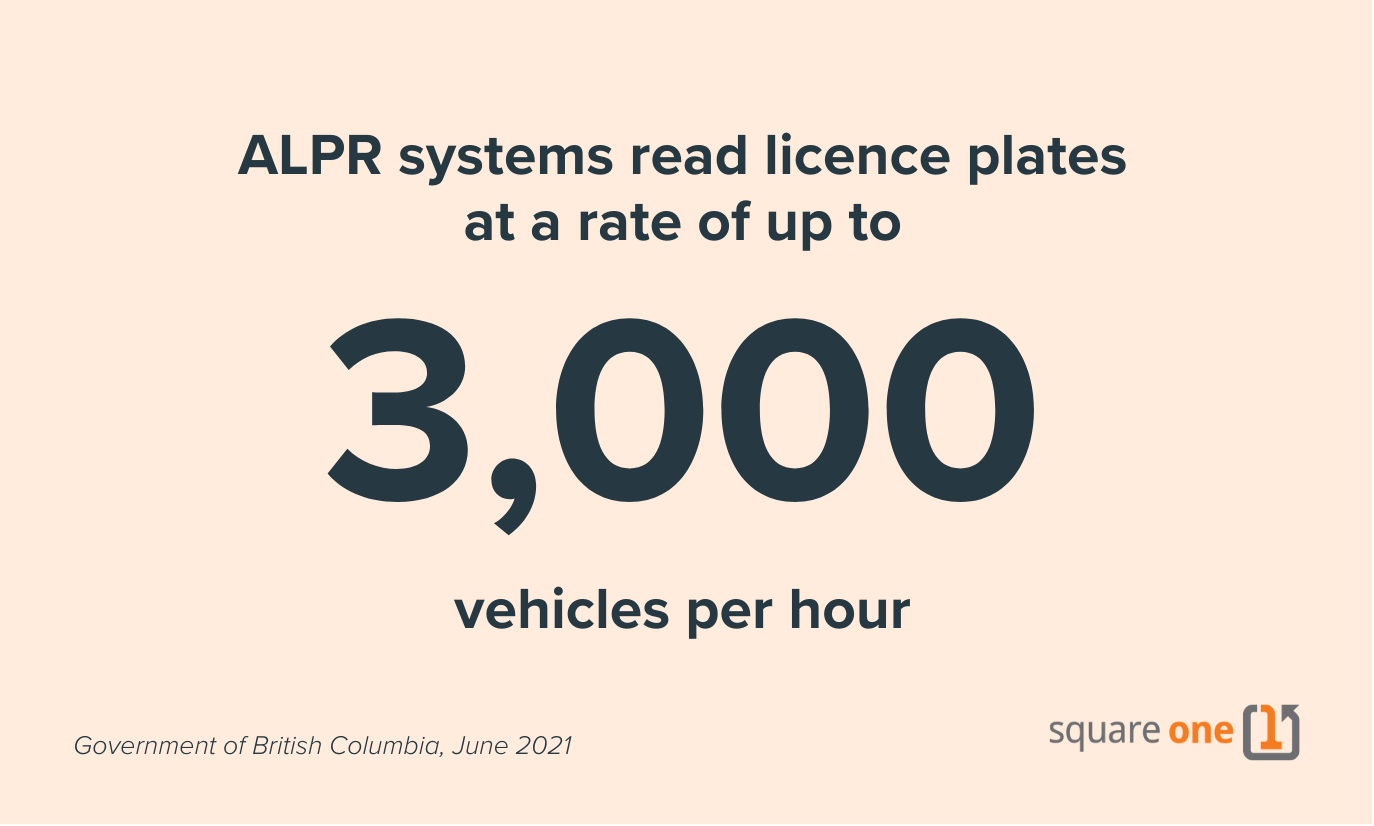
Licence plates are a cornerstone of modern traffic enforcement. Using automated license plate recognition (ALPR) camera systems, police officers can scan the plate’s serial to identify vehicles. They can use “hit” results to track down plates associated with suspended drivers, stolen cars, or even individuals with outstanding arrest warrants. If the registration plate number they scan is expired, they can issue a ticket.
Always keep your car registration and insurance papers inside your car, ideally in a secure location — most people choose the glove compartment. If an officer pulls you over, they may ask you to present both.
How do you register a vehicle?
The specific steps you take to register a car depend entirely on how you’re acquiring it. Are you buying it from a dealership or a private seller? Is it a gift from someone? Or, are you bringing it from another province or territory, or a U.S. state?
- If it’s a dealership purchase, the dealer will almost always handle the registration for you. They’ll collect all the necessary information and submit the required paperwork to the provincial licensing authority on your behalf. Usually, they can provide you with the official vehicle permit and your new licence plates immediately. If not, they may issue a temporary permit, with the permanent documents and plates arriving in the mail shortly after.
- If it’s a private purchase or a gift, you’ll typically have to register it on your own. Of course, this time, you’ll need to familiarize yourself with the process and required documents. Keep in mind that the paperwork required may vary by province (as we’ll cover in the next section).
- If you move to a new province and bring your car with you, you are considered a new resident and must switch the registration over to your new province’s system. Most provinces provide a grace period for new residents to update their documentation. Within this window, you must obtain a new driver’s licence, vehicle registration, and car insurance in your new province.
General requirements
To register a car anywhere in Canada, you’ll need a core set of documents. These include:
- Proof of identity: a government-issued photo ID or driver’s licence.
- Proof of ownership: a New Vehicle Information Statement (NVIS) for new cars, or a bill of sale for used cars.
- Proof of insurance: a certificate of insurance or proof of insurance card, commonly known as a “pink slip.”
If you’re registering a used car, you may also need to prove its roadworthiness. Usually, this is a safety inspection certificate issued by a service centre in the province.
If the car is from another country, it must be formally imported with Transport Canada before it can be registered, licensed, and insured in any province. It must also meet the requirements of Canada’s Motor Vehicle Safety Act.1 This might involve something relatively simple, such as changing a U.S. vehicle’s odometer from miles to kilometres; but in some cases, a model manufactured for sale overseas, if it wasn’t also built by the automaker there for sale in Canada, may not comply with Canada’s standards. Be sure you know the rules you must meet.
Related articles
Vehicle registration by province
The vehicle registration system can vary significantly depending on where you live. Here’s how it works in Canada’s largest provinces.
Note that these examples are for private vehicles, not commercial ones. Some provinces may also have restrictions on vehicle inspection requirements depending on how old the car is.
Alberta
In Alberta, vehicle registration services are offered in person at Registry Agent offices.
The applicant will need to bring proof of insurance from a private car insurance provider in the province.
For used cars, the Government of Alberta provides a standard bill of sale form on its website to facilitate the transfer of ownership. An out-of-province, salvage, or commercial inspection may be required if the car is from another province.
To register a car from a different country, the applicant must get the proper inspection completed and provide import documentation. New vehicles will also need the NVIS or a Certificate of Origin.
If the applicant can’t attend the registry in person, they can appoint someone to register the car on their behalf. The appointed individual must bring an Authorization for Vehicle Services form, signed by the applicant, permitting them to act on their behalf, along with the applicant’s insurance and ownership documents of the car. The appointed individual must have a valid Alberta driver’s licence.
Those staying in Alberta for 183 days or less don’t need to switch to an Alberta registration, provided the car is registered elsewhere. New residents, however, have a grace period of 90 days to switch over to Alberta’s registration system.2
British Columbia
In British Columbia, both vehicle registration and auto insurance are managed by ICBC. Applicants can register their car through any Autoplan broker in the province.
If the car is already registered in BC, the applicant needs to visit an Autoplan broker. ICBC recommends that the buyer and seller go together. Buyers must register their cars with ICBC within 10 days of purchase.
If the car is being brought from a different province, the applicant will need the vehicle’s current registration and a bill of sale. The car must also pass an in-province safety inspection, but there may be an exception for those brought from Alberta, Saskatchewan, or Manitoba.3
The deadline for registering out-of-province vehicles with ICBC is 30 days after arriving in BC.4
Manitoba
Manitoba Public Insurance manages both vehicle registration and insurance in the province. Both documents can be obtained together from an Autopac agent.
If the car was bought privately, the applicant will need the bill of sale, along with a transfer of ownership document completed by the previous owner. They’ll also need to get a certificate of inspection issued by a Manitoba vehicle inspection station, or another government-approved inspection program if the car is being transferred from BC, Alberta, Saskatchewan, Ontario, or Quebec. Outside of these regions, inspections must be done in the province.
If someone wants to bring their car into Manitoba, they can obtain a seven- or 30-day Temporary Registration Permit while the vehicle undergoes a mandatory inspection.
If someone owns a car that’s licensed and insured and they replace it with one in the same class, they can continue to use that car’s registration, insurance, and licence plates on the new one for up to seven days, but only after they’ve disposed of the old car. The coverage will only be at the old car’s value, so if the replacement vehicle is worth more, the applicant should consider switching the coverage right away.
Newcomers in Manitoba have a three-month grace period to obtain their registration and insurance papers.5
Ontario
In Ontario, vehicle registration services are delivered by ServiceOntario.
Ontario operates within a private auto insurance market. Applicants must obtain proof of insurance from a licensed car insurance provider in the province.
A key feature in Ontario’s private vehicle sales is the Used Vehicle Information Package (UVIP). The seller is legally required to purchase this package from ServiceOntario and provide it to the buyer. The UVIP contains the vehicle’s registration history in Ontario, lien information, and the official bill of sale section that both parties must complete.
While the seller must provide the UVIP, the car buyer can also purchase one before the sale if they want to confirm the vehicle’s information before agreeing to buy it, or they can ask to see the seller’s copy beforehand.
The buyer will also need to provide a completed Application for Vehicle Registration form, the completed transfer portion of the seller’s vehicle permit, and the plate portion of the vehicle permit (if the buyer wishes to use their existing licence plates).
Most passenger vehicles will also need a Safety Standards Certificate. Passing the inspection is a prerequisite for getting an Ontario licence plate.
The registration deadline in Ontario is six days after the sale.6 New Ontario residents have a 30-day grace period to register their vehicles.7
Quebec
In Quebec, vehicle registration is done with the Société de l’assurance automobile du Québec (SAAQ). Applicants can register their cars through respective dealerships, at an SAAQ service centre, or even online if all conditions are met.
Applicants who buy a car in Quebec have up to 30 days to register it following the sale. For newcomers, the grace period given is 90 days after establishing residence in the province.8
If the seller is transferring ownership to the buyer, they can complete the registration together through SAAQclic. There are, however, conditions under which it may qualify for an online transfer. Specifically, it must be a passenger-type vehicle, under 25 years old, and registered under a single name (i.e. not jointly purchased). There must also be no outstanding fines (under the Highway Safety Code or a municipal traffic or parking bylaw offence) associated with either party.
Most Quebec dealerships will use the SAAQclic service. If not, the applicant will need to visit an SAAQ service centre with a mechanical inspection report and proof of civil liability insurance from a private insurer with at least $50,000 in coverage. For proof of ownership, Quebec requires the following:
- For new vehicles: the Attestation de transaction avec un commerçant and the NVIS provided by the dealer
- For used vehicles: the Attestation de transaction avec un commerçant and the previous owner’s registration
SAAQ will issue a temporary paper licence plate while they mail the metal licence plate to the buyer. This generally takes about 10 to 20 business days. Alternatively, the seller may choose to transfer the vehicle’s existing licence plates to the buyer.9 10
Saskatchewan
In the province, Saskatchewan Government Insurance (SGI) handles vehicle registration through its network of motor licence issuers.
To register a car, applicants must satisfy two conditions: they must be the listed owner on the proof of ownership document, and they must have an insurable interest in the car (meaning they would be financially affected if something were to ever happen to it).
Applicants must also demonstrate that they have the minimum auto coverage mandated by law.11
If the car is brand new, the applicant will need the NVIS. A letter from the vehicle dealer may also be accepted.
Dealerships can issue temporary permits for those needing to set up their new registration with a motor licence issuer or drive to an inspection centre. Out-of-province cars may need to undergo an SGI-approved vehicle inspection program, for example.
Saskatchewan licence plates stay with their respective owners. The applicant can transfer their current registration and plates to a new car, but they can’t keep the previous owner’s plates attached; these must be returned to SGI. Applicants have seven days to transfer their existing plates to the vehicle they just acquired.
New residents have a 90-day grace period to register their car with SGI.12