Hybrid cars: worth it or not?

Written by Seamus McKale

Reviewed by Jil McIntosh

Updated July 30, 2026 | Published July 30, 2026

Hybrid vehicles have a combination of a gasoline engine and electric motor, providing long driving range and good fuel efficiency. They’re a popular choice for Canadians; in 2025, over 15% of newly registered vehicles were hybrids.1

There are both pros and cons of choosing a hybrid over a fully gas-powered car or an all-electric car. In this guide, we’ll explain the types of hybrid cars and how to decide whether a hybrid is worth it for you.

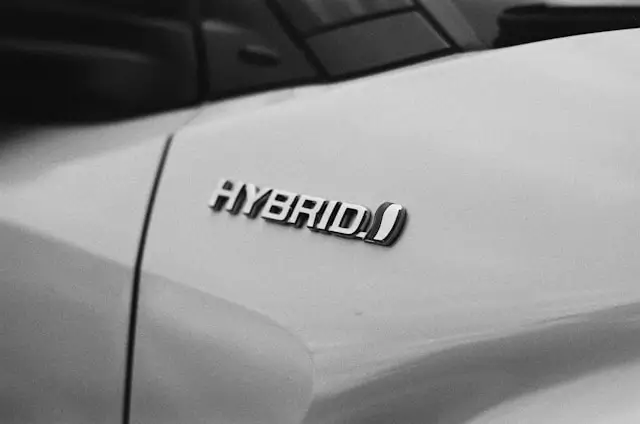
A closeup of a badge that reads 'Hybrid'on the side of a silver car

The important points

  • Hybrid cars have both a gas engine and electric motors, giving them good fuel efficiency and without the range anxiety some drivers have with an all-electric vehicle.
  • Hybrid cars typically cost more to buy than traditional gas-powered cars, but have lower fuel and maintenance costs.

Electrified vehicle acronyms

There are many confusing acronyms when talking about types of hybrid and electric cars. Here are the common acronyms to keep in mind for now:

  • ICE: Internal combustion engine (gas or diesel)
  • HEV: Hybrid electric vehicle
  • PHEV: Plug-in hybrid electric vehicle
  • MHEV: Mild-hybrid electric vehicle
  • BEV: Battery electric vehicle (no ICE)
  • ZEV: Zero-emission vehicle (includes BEVs and PHEVs, but not HEVs)

What is a hybrid car?

A hybrid vehicle is one that includes both a traditional internal combustion engine and one (or more) electric motors. The electric motor powers the car at low speeds, reducing the vehicle’s fuel consumption. The gas motor takes over at high speeds, or when the battery runs out of charge.

There are three types of hybrid cars:

  • Conventional hybrid electric vehicles can drive on gasoline, electricity, or a combination of the two. They automatically switch between them depending on driving conditions. They don’t get plugged in; they charge the battery primarily through regenerative braking — capturing otherwise-wasted energy during deceleration and feeding it into the battery — or, if necessary, from the engine.
  • Plug-in hybrid electric vehicles have a larger battery, and can be plugged in. Once they’re charged, they can drive exclusively on electricity, with most models ranging from about 40 to 90 kilometres or so. Once the charge depletes, PHEVs automatically switch to conventional gas-electric hybrid operation, and use regenerative braking to charge the battery. As long as there’s gas in the tank, they’ll continue to drive.
  • Mild-hybrid vehicles use a small, 48-volt electric motor that assists the gas engine on acceleration to help improve fuel economy and performance. A MHEV can’t drive on electricity alone. It self-charges the battery with regenerative braking and doesn’t plug in. Note that mild hybrids operate closer to a regular gasoline vehicle, and there aren’t many models available in Canada. We’ll primarily look at conventional hybrids and PHEVs for the rest of this article.

Comparing hybrids to other vehicles

As you might expect, HEVs and PHEVs fall somewhere between ICE cars and BEVs in most respects.

  • Purchase price: The price of a vehicle depends more on the specific model than anything else. ICE models usually start at the lowest price point, while HEVs tend to cost more than them. PHEVs and BEVs are pricier again.
  • Fuel economy: HEVs average about 30% better fuel economy than ICE cars.2 PHEVs can do even better, but it depends on whether the owner plugs it in regularly and how far it’s driven. If most trips are within its range, in theory the owner could do most driving on electric-only.3 Once the stored charge depletes, a PHEV’s fuel efficiency is usually comparable to an HEV.4
  • Maintenance: BEVs have lower maintenance costs compared to ICE vehicles, since they don’t have an engine.5 Hybrids do, and they’ll require oil changes and similar maintenance costs as an ICE vehicle. They may not need new brakes as often, though, because the regenerative braking can help reduce wear-and-tear on them. Of course, BEVs, HEVs, and ICE all require regular checkups and maintenance on their steering, suspension, brakes, and tires.
  • Environmental impact: Over the vehicle’s life, including emissions from manufacturing, HEVs emit about 27% less greenhouse gas than ICE vehicles (but 33% more than BEVs), according to one study.6 For PHEVs, the value is similar, but varies based on how the charging power is generated. This makes PHEVs great for environmentally conscious Canadians — 83% of our electricity comes from non-emitting sources.7
  • Resale value: Hybrid vehicles hold their value better than any other type. They’re in high demand, with some models having months-long wait lists to buy new. Used hybrids in decent condition can fetch excellent prices — in some cases, 60% or more of their original retail price.2
  • Purchase incentives: The federal government, and some provinces and territories, may offer rebates for EVs and PHEVs, but only for plug-ins. Conventional hybrids generally don’t qualify.

Non-plug-in hybrid models generally don’t qualify for any government purchase incentives.

Related articles

It only takes 5 minutes

ready for an online quote? Your time matters, and so does your stuff. Get a personalized home insurance quote in 5 minutes. That’s less time than it takes to wait in line for coffee.

Before you start, please review our Privacy Policy and Terms of Use.

Is buying a hybrid worth it?

“Worth it” depends on what’s important to you. Is it all about cost? Does environmental impact matter? What about the actual experience of driving the car?

Here is a ranking of how each type of vehicle (ICE, HEV, and ZEV) compares in various categories.

Spoiler alert: hybrids, true to their name, tend to fall in between the other two types.

Best fuel economy

Assuming a typical mix of city and highway driving.

  1. ZEV
  2. HEV
  3. ICE

Lowest purchase cost

Typical cost of the most affordable vehicles in each category.

  1. ICE
  2. HEV
  3. ZEV

Lowest maintenance costs

Ongoing maintenance costs and service costs for breakdowns or worn-out parts.

  1. ZEV
  2. HEV
  3. ICE

Lowest repair costs

The average cost to repair physical damage to the vehicle following an accident.

  1. ICE
  2. HEV
  3. ZEV

Best driving experience

Responsiveness, braking, cabin noise, vibration, etc.

  1. ZEV
  2. HEV
  3. ICE

Lowest emissions

Lifetime greenhouse gas emissions, including manufacturing.8

  1. ZEV
  2. HEV
  3. ICE

Insurance considerations

Car insurance for hybrids works just like it does for any other car. Most insurers don’t treat them any differently than ICE vehicles.

However, insurance for hybrid vehicles may be slightly more expensive than for similar ICE vehicles. There are two reasons for this.

The first is because of hybrids’ higher purchase cost and strong value retention. Car insurance pays to repair or replace a vehicle up to its actual cash value. When a vehicle’s value is higher, the cost of insuring it will be higher as well.

The second is that hybrid cars are generally more expensive to repair than ICE vehicles. While routine maintenance for hybrids may be cheaper, repairing damage is not. Batteries alone can cost thousands of dollars to replace.

Commonly asked questions

What is the cheapest hybrid car in Canada?

The lowest-cost hybrid vehicles available in Canada for the 2026 model year include the Toyota Corolla Hybrid LE (MSRP $27,990), the Hyundai Elantra (MSRP $31,999), and the Kia Niro (MSRP $30,845).

How long do hybrid batteries last?

Modern hybrid batteries are designed to last quite a while. To reflect that, most come with 8 to 10-year warranties. But, like the battery in your phone, they do degrade over time, to the tune of about 1.8% capacity loss per year.

Do you have to plug in a hybrid?

You can’t plug in a conventional hybrid, only a PHEV. When you do, you get a range of electric-only driving of around 40 to 90 kilometres, depending on the model.

When that depletes, it will switch to regular hybrid operation. You don’t have to plug in a PHEV, but it doesn’t make sense to pay extra for one unless you plan to regularly plug it in and drive on electricity alone.

Can you drive a hybrid in winter?

Hybrid vehicles are perfectly functional in cold weather. While there may be some loss in battery efficiency, modern hybrid cars aren’t harmed by winter driving.9

Sources

  1. Canada Energy Regulator. “Market Snapshot: Canadian Electric Vehicle Sales Ride a Roller Coaster in 2024 and 2025.” cer-rec.gc.ca, 22 April 2026, www.cer-rec.gc.ca/en/data-analysis/energy-markets/market-snapshots/2026/market-snapshot-canadian-electric-vehicle-sales-ride-a-roller-coaster-in-2024-and-2025.html.
  2. Prymak, Shari. “Do Hybrid Cars Save You More Money Than Gas Cars?” YouTube, uploaded by Car Help Corner, 17 August 2025, www.youtube.com/watch?v=jBsjYOPSql4.
  3. Canada Energy Regulator. “Market Snapshot: Battery Electric Vehicles Are Far More Fuel Efficient Than Vehicles With Internal Combustion Engines.” cer-rec.gc.ca, 24 February 2021, www.cer-rec.gc.ca/en/data-analysis/energy-markets/market-snapshots/2021/market-snapshot-battery-electric-vehicles-are-far-more-fuel-efficient-than-vehicles-with-internal-combustion-engines.html.
  4. Canada Energy Regulator, “Market Snapshot: Plug-in Hybrid Vehicles Are Far More Fuel Efficient Over Short Trips Than Long Trips.” cer-rec.gc.ca, 3 November 2021, www.cer-rec.gc.ca/en/data-analysis/energy-markets/market-snapshots/2021/market-snapshot-plug-in-hybrid-vehicles-are-far-more-fuel-efficient-over-short-trips-than-long-trips.html.
  5. Veza, Ibham, et al. “Electric Vehicle (EV) and Driving Towards Sustainability: Comparison Between EV, HEV, PHEV, and ICE Vehicles to Achieve Net Zero Emissions by 2050 from EV.” Alexandria Engineering Journal, Volume 82, November 2023, pp. 459–467. doi.org/10.1016/j.aej.2023.10.020.
  6. MIT Energy Initiative. “Insights Into Future Mobility.” energy.mit.edu, November 2019, energy.mit.edu/wp-content/uploads/2019/11/Insights-into-Future-Mobility.pdf.
  7. IEA. “Canada 2022.” iea.org, 13 January 2022, www.iea.org/reports/canada-2022.
  8. Negri, Marta and Georg Bieker. “Life-cycle Greenhouse Gas Emissions From Passenger Cars in the European Union: A 2025 Update and Key Factors to Consider.” International Council on Clean Transportation, 8 July 2025, theicct.org/publication/electric-cars-life-cycle-analysis-emissions-europe-jul25.
  9. Page Deaton, Jamie. “Do Hybrid Cars Perform Well in Cold Weather?” HowStuffWorks, auto.howstuffworks.com/fuel-efficiency/hybrid-technology/hybrid-cars-perform-cold-weather.htm. Accessed 17 June 2026.

Want to learn more? Visit our vehicle owner resource centre for dozens of helpful articles. Or, get an online car insurance quote in under 5 minutes and find out how affordable personalized coverage can be.

About the expert: Jil McIntosh

Jil McIntosh writes professionally about a variety of automotive subjects, and has contributed to such publications as Driving.ca, AutoTrader.ca, Automotive News Canada, Old Autos, Toronto Star Wheels, and more. A member of the Automobile Journalists Association of Canada (AJAC), she has won numerous awards for her writing, including Automotive Journalist of the Year.

Computer

Get a free quote

Get a personalized online home insurance quote in just 5 minutes and see how much money you can save by switching to Square One.

Get an online quote now

People

Protect your family

Even when you take precautions, accidents can happen. Home insurance is one way to protect your family against financial losses from accidents. And, home insurance can start from as little as $15/month.

Learn more
