The important points
- Drivers must report any collision they’re involved in to their insurer, regardless of their intention to make a claim.
- Self-paying for vehicle repairs can be worthwhile in some scenarios, but it’s up to the driver to make that judgment call.
- Failing to report an accident can result in denied coverage, a cancelled policy, or even personal responsibility for the other driver’s damages.
Can you pay for repairs yourself after a car accident?
Whether someone makes an insurance claim or not is entirely their choice. Some drivers go decades without making one. Some drivers (if they’re lucky) never make one at all. The reality is, covering a loss out of pocket isn’t something everyone can afford — that’s why insurance exists.
As a policyholder, your policy gives you the right to claim for covered damage. If you back into a post in a parking lot and crack your bumper, you’re free to take your car to a body shop to fix it. That can be a perfectly reasonable choice, assuming the cost is small enough and the damage is yours alone. The moment anyone else is involved, relying on your policy is almost always the better choice — not just financially, but also for liability reasons.
If someone else was hurt, or another driver makes a claim against you, your provider will be involved either way.
That brings us to another important aspect of this topic, which is the difference between making a claim and reporting an accident:
- Making a claim means asking your insurance company to pay for damage or injuries under your policy. Making a claim is optional.
- Reporting an accident means telling your insurance provider that an accident happened, whether or not you want any money from them. Reporting is a legal responsibility under provincial insurance laws.
A common misconception among drivers is that a provider’s involvement is only necessary if they’ll be paying for something. In a poll of 1,000 drivers, 43% said they’d opted to pay for repairs out of pocket, and of those, 57% said they did so to avoid a hike in their premiums.1 There’s enough evidence suggesting that drivers aren’t aware of their reporting obligations, so it’s important we dive into this further.
Reporting an accident to your insurer
As noted earlier, notice must be given to the insurer following any accident.
In all provinces, drivers must promptly notify their insurer of any accident, even if they don’t make a claim, and even if they’re not at fault.2
In Ontario, the Financial Services Regulatory Authority (FSRA) advises drivers to report an accident to their insurance company within seven days, or as soon as possible afterward.3 Other provinces use similar “prompt notice” or “as soon as practicable” language. In any case, the sooner you inform your insurer, the better.
Now, why does the insurance company care about an accident you’re not claiming for?
There are three main reasons:
- The other driver might claim against you. Even if you and the other driver verbally agreed not to claim against each other, that doesn’t necessarily mean they won’t do so. They can still pursue that claim if they believe you were at fault or if they need to access accident benefits, for example. If that’s the first your insurer is hearing about the accident, they can deny coverage for the incident, leaving you personally responsible for the ensuing damages.
- Undisclosed damage can skew future claims. If your car carries old, unrepaired damage your insurer doesn’t know about, it can complicate your future claims. If an adjuster can’t distinguish between pre-existing damage and new damage, they may not pay out what they can’t verify.
- Accurate pricing. Insurers set premiums based on risk. If accidents go unreported, the insurer is pricing your policy (and everyone else’s) on incomplete information.
“Paying for your own car repairs after an accident may seem like the responsible thing to do. But if another car is involved, it can actually be financially risky,” says Pamela Boltz, Director of Product + Underwriting at Square One.
“If you personally agree to pay for the other driver’s damages in return for not reporting to an insurer, you’re relying on an informal agreement with no enforceable terms, meaning you’ll have no way of knowing whether the other driver will follow through. They may take your payment and submit a claim for repairs or injuries anyway, and then you’re left responsible for trying to recover money you’ve already paid. That claim will end up on a third-party history report regardless, and it may affect your future rating and eligibility.”
Single-vehicle accidents are no different. You may be inclined to think that since no one else is involved, it won’t come back to haunt you — that’s not always the case.
“Even single-vehicle collisions should be reported. Most homeowners, businesses, and government properties have security cameras, which means they’ll see if someone hits a fence post, knocks over a sign, or scrapes a piece of equipment with their car. They can report the incident to the police and to your insurance company,” says Boltz.
Basically, any accident involving another person, another vehicle, or someone else’s property carries real risk if you keep it to yourself. Always report it.
Related articles
Reporting an accident to the police
Whether you must report an accident to the police depends on the situation.
Everywhere in Canada, you must call 911 if anyone is injured or killed, or if you suspect a criminal offence like impaired driving or a hit-and-run.
For property-damage-only collisions, some provinces set a dollar threshold for when to involve police:
| Province |
When to involve police |
Reporting procedure |
| Alberta |
Damage exceeds $5,000 |
Report to the police; several cities direct non-urgent collisions to a reporting centre4 |
| British Columbia |
Damage exceeds $10,000 |
Report to the police; all other accidents go through ICBC5 |
| Ontario |
Damage exceeds $5,000 |
Drive or tow vehicle to a Collision Reporting Centre; police attend the scene only for damage to public property6 |
| Quebec |
You hit an unattended vehicle or object and can’t reach the owner |
Call 911 from the scene; for identifiable collisions, both drivers complete a joint report7 |
Police reports must be filed within 24 to 48 hours, depending on the province.
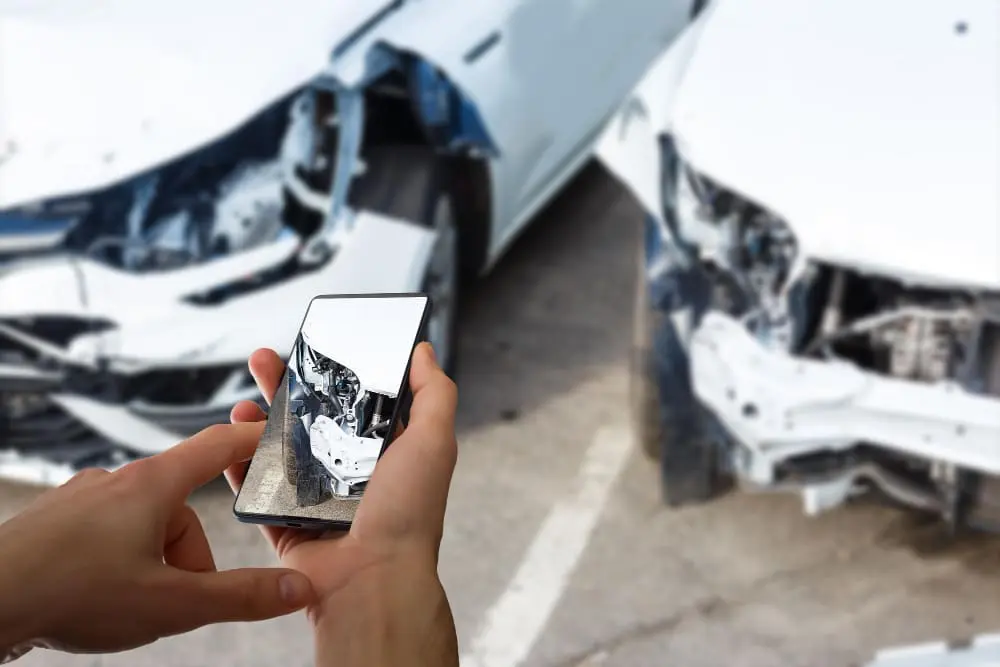
Even if you involve the police, collect as much evidence as you can on your own: the other driver’s licence and insurance information, photos, nearby witnesses, camera footage — basically any information you can substantiate. If an insurance or legal dispute arises, or the officer’s report is inaccurate, the evidence can back you up.
One thing to note: when estimating damage value, don’t always rely on visual assessments. Modern bumpers house various hidden technologies, such as sensors, cameras, and radar units. What might seem like a minor dent or crack could turn out to be a problem worth thousands of dollars. If possible, arrange for the vehicle to be assessed by a mechanic at a repair shop.