Repairing vehicle damage: pay yourself or use insurance?

Written by Ziyad Bakkali

Reviewed by Sunny Dhiman

Updated August 21, 2026 | Published August 21, 2026

You’re not required to make an insurance claim after a car accident — it’s entirely optional. You are, however, legally required to notify your insurer, even if you plan to pay for the repairs yourself.

In most cases, using your policy is probably for the best, especially if there’s a chance you’re liable for damage or injuries. There’s a little more flexibility when it comes to minor damage, but it usually depends on what you can afford. For example, some people choose not to claim to preserve their claims-free history. Claim or no claim, never keep your insurer in the dark — it can backfire.

In this article, we’ll explain when it makes sense to pay for repairs out of pocket, why you always need to inform your insurance provider, and what can go wrong if you keep quiet.

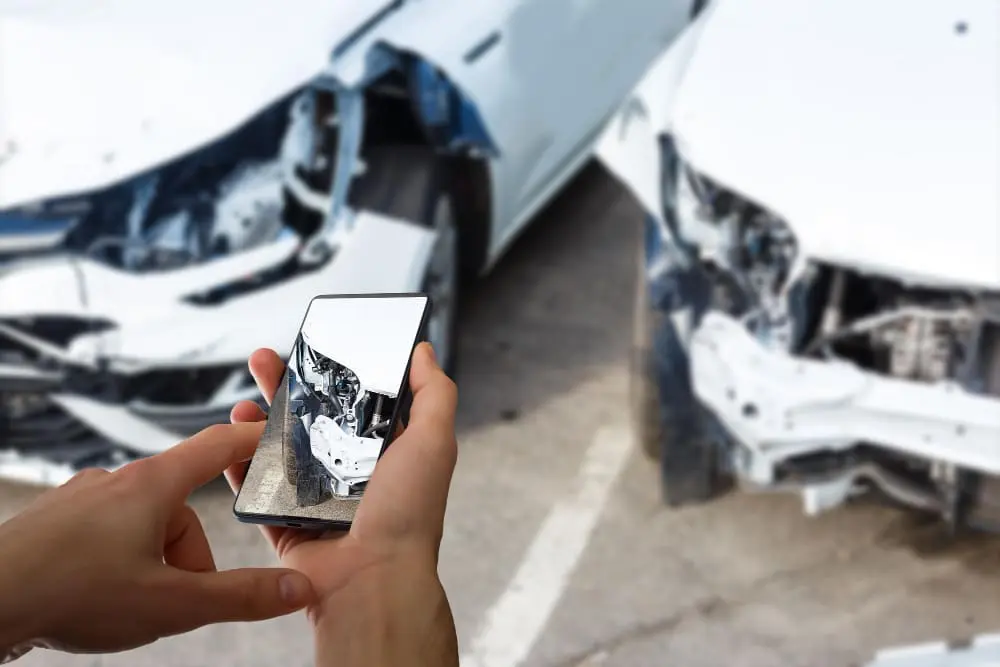
A person photographing collision damage with a smartphone, with the white car's crushed front end visible in the background.

The important points

  • Drivers must report any collision they’re involved in to their insurer, regardless of their intention to make a claim.
  • Self-paying for vehicle repairs can be worthwhile in some scenarios, but it’s up to the driver to make that judgment call.
  • Failing to report an accident can result in denied coverage, a cancelled policy, or even personal responsibility for the other driver’s damages.

Can you pay for repairs yourself after a car accident?

Whether someone makes an insurance claim or not is entirely their choice. Some drivers go decades without making one. Some drivers (if they’re lucky) never make one at all. The reality is, covering a loss out of pocket isn’t something everyone can afford — that’s why insurance exists.

As a policyholder, your policy gives you the right to claim for covered damage. If you back into a post in a parking lot and crack your bumper, you’re free to take your car to a body shop to fix it. That can be a perfectly reasonable choice, assuming the cost is small enough and the damage is yours alone. The moment anyone else is involved, relying on your policy is almost always the better choice — not just financially, but also for liability reasons.

If someone else was hurt, or another driver makes a claim against you, your provider will be involved either way.

That brings us to another important aspect of this topic, which is the difference between making a claim and reporting an accident:

  • Making a claim means asking your insurance company to pay for damage or injuries under your policy. Making a claim is optional.
  • Reporting an accident means telling your insurance provider that an accident happened, whether or not you want any money from them. Reporting is a legal responsibility under provincial insurance laws.

A common misconception among drivers is that a provider’s involvement is only necessary if they’ll be paying for something. In a poll of 1,000 drivers, 43% said they’d opted to pay for repairs out of pocket, and of those, 57% said they did so to avoid a hike in their premiums.1 There’s enough evidence suggesting that drivers aren’t aware of their reporting obligations, so it’s important we dive into this further.

Reporting an accident to your insurer

As noted earlier, notice must be given to the insurer following any accident.

In all provinces, drivers must promptly notify their insurer of any accident, even if they don’t make a claim, and even if they’re not at fault.2

In Ontario, the Financial Services Regulatory Authority (FSRA) advises drivers to report an accident to their insurance company within seven days, or as soon as possible afterward.3 Other provinces use similar “prompt notice” or “as soon as practicable” language. In any case, the sooner you inform your insurer, the better.

Now, why does the insurance company care about an accident you’re not claiming for?

There are three main reasons:

  • The other driver might claim against you. Even if you and the other driver verbally agreed not to claim against each other, that doesn’t necessarily mean they won’t do so. They can still pursue that claim if they believe you were at fault or if they need to access accident benefits, for example. If that’s the first your insurer is hearing about the accident, they can deny coverage for the incident, leaving you personally responsible for the ensuing damages.
  • Undisclosed damage can skew future claims. If your car carries old, unrepaired damage your insurer doesn’t know about, it can complicate your future claims. If an adjuster can’t distinguish between pre-existing damage and new damage, they may not pay out what they can’t verify.
  • Accurate pricing. Insurers set premiums based on risk. If accidents go unreported, the insurer is pricing your policy (and everyone else’s) on incomplete information.

“Paying for your own car repairs after an accident may seem like the responsible thing to do. But if another car is involved, it can actually be financially risky,” says Pamela Boltz, Director of Product + Underwriting at Square One.

“If you personally agree to pay for the other driver’s damages in return for not reporting to an insurer, you’re relying on an informal agreement with no enforceable terms, meaning you’ll have no way of knowing whether the other driver will follow through. They may take your payment and submit a claim for repairs or injuries anyway, and then you’re left responsible for trying to recover money you’ve already paid. That claim will end up on a third-party history report regardless, and it may affect your future rating and eligibility.”

Single-vehicle accidents are no different. You may be inclined to think that since no one else is involved, it won’t come back to haunt you — that’s not always the case.

“Even single-vehicle collisions should be reported. Most homeowners, businesses, and government properties have security cameras, which means they’ll see if someone hits a fence post, knocks over a sign, or scrapes a piece of equipment with their car. They can report the incident to the police and to your insurance company,” says Boltz.

Basically, any accident involving another person, another vehicle, or someone else’s property carries real risk if you keep it to yourself. Always report it.

Related articles

Reporting an accident to the police

Whether you must report an accident to the police depends on the situation.

Everywhere in Canada, you must call 911 if anyone is injured or killed, or if you suspect a criminal offence like impaired driving or a hit-and-run.

For property-damage-only collisions, some provinces set a dollar threshold for when to involve police:

Province When to involve police Reporting procedure
Alberta Damage exceeds $5,000 Report to the police; several cities direct non-urgent collisions to a reporting centre4
British Columbia Damage exceeds $10,000 Report to the police; all other accidents go through ICBC5
Ontario Damage exceeds $5,000 Drive or tow vehicle to a Collision Reporting Centre; police attend the scene only for damage to public property6
Quebec You hit an unattended vehicle or object and can’t reach the owner Call 911 from the scene; for identifiable collisions, both drivers complete a joint report7

Police reports must be filed within 24 to 48 hours, depending on the province.

Even if you involve the police, collect as much evidence as you can on your own: the other driver’s licence and insurance information, photos, nearby witnesses, camera footage — basically any information you can substantiate. If an insurance or legal dispute arises, or the officer’s report is inaccurate, the evidence can back you up.

One thing to note: when estimating damage value, don’t always rely on visual assessments. Modern bumpers house various hidden technologies, such as sensors, cameras, and radar units. What might seem like a minor dent or crack could turn out to be a problem worth thousands of dollars. If possible, arrange for the vehicle to be assessed by a mechanic at a repair shop.

It only takes 5 minutes

ready for an online quote? Your time matters, and so does your stuff. Get a personalized home insurance quote in 5 minutes. That’s less time than it takes to wait in line for coffee.

Before you start, please review our Privacy Policy and Terms of Use.

When to pay out of pocket instead of making a claim

You may decide to skip making a claim in the following situations:

  • The repairs cost slightly more than your deductible. Your deductible is the first portion of a claim you pay before insurance covers the rest. In such cases, the question becomes whether the payout justifies the claim. For example, if your car suffered $1,200 worth of damage and you make a claim with a $1,000 collision deductible, you’re taking a claim on your record and paying the full deductible amount out of pocket, only to get a $200 settlement. Whether such a trade-off is worth it is up to the driver.
  • To protect your insurance history. If the repair is relatively inexpensive, making a claim may not be worth the potential impact on your premiums or claims-free discount. In some cases, paying for the damage yourself can be the more economical option.

Keep in mind that the insurer won’t contribute anything if the total cost of repairs is less than your deductible.

If you’re unsure about what’s most financially beneficial, you can always report the accident, ask your insurer how a claim may affect your premiums, and then decide whether to proceed with the claims process. The important thing is to notify your insurer first.

What are the consequences of not reporting an accident?

If someone doesn’t report an accident to their insurer when required, they may be breaching their insurance contract. Even if someone is unaware of their reporting obligations, insurers have ways to uncover undisclosed accidents.

Insurers require full disclosure of a person’s claims history when they apply for or renew a policy. Intentionally withholding prior collisions or any claims-related information may constitute material misrepresentation, which is a form of insurance fraud.

There are a couple of other risks:

  • Denied coverage. If the other party claims against you and you never reported the accident, the insurer may refuse to indemnify you — that is, refuse to pay the claim on your behalf. You could be personally responsible for the other party’s vehicle damage — and, far worse, any injury claims. The insurer could also cancel or even rescind your policy.
  • Hidden damage. Not all damage is apparent in the moment. What might seem like $1,000 worth of cosmetic damage can become $4,000 once the shop pulls the bumper off and discovers damaged components inside. Modern bumpers hide sensors, cameras, and radar units, which are all expensive to replace.
  • Lawsuits. In particularly severe cases, the not-at-fault party may take legal action. Severe cases are those where the at-fault driver was guilty of a criminal offence (like drunk driving) or caused permanent injuries. Normally, this is where third-party liability coverage would come in. However, the insurer would be under no obligation to cover the costs if their insured driver never reported the accident.

Of course, you’d save yourself a whole lot of stress (and money) by doing some basic due diligence upfront. Always keep your insurer informed about any material changes to your vehicle’s condition.

Commonly asked questions

Will paying out of pocket for vehicle damage raise my premiums?

Covering a vehicle accident yourself generally won’t result in a premium increase, as you’re not going through insurance.

Collisions for which you do make a claim and are at fault generally will result in increases. There may be an exception for the first at-fault accident if your policy includes accident forgiveness coverage, but this isn’t offered by all providers. Of course, in these cases, the benefit is that your policy pays for the damage.

Self-insurance has its advantages and drawbacks, depending on the severity of the situation. It will always come down to what makes the most financial sense for you.

The other driver and I agreed to settle privately. Is that legal?

There’s nothing inherently illegal about two drivers agreeing to settle an accident privately. However, a private agreement doesn’t remove your obligation to tell your insurer that the accident happened. Plus, even if you do settle privately, there’s nothing preventing the other driver from changing their mind later on.

If you’re considering a private settlement, don’t forget to inform your insurer. In many cases, reporting an accident doesn’t necessarily mean you have to make a claim; it simply ensures your insurer knows what happened and can advise you on your options.

What should I do if the accident only involved my car?

A single-vehicle accident should be treated like any other accident: prioritize the safety of anyone in your car, document the damage, and determine whether the vehicle is still roadworthy.

If no other vehicle or person was involved, the risk of a surprise claim from someone else is low. You’ll realistically only be worried about your car’s damage, and whether it’s worth making a claim for. Of course, your insurer will want to know about this as well.

Sources

  1. Fraser, Laura. “Paid Out-of-Pocket for a Fender-Bender? Fine, but the Law Says You Have to Tell Your Insurer.” CBC Radio, 24 February 2026, cbc.ca/radio/costofliving/insurance-costs-car-9.7089016.
  2. Recamara, Josh. “To Report or Not to Report: Do Your Clients Know the Rules after a Crash?” Insurance Business Canada, 18 February 2026, insurancebusinessmag.com/ca/news/auto-motor/to-report-or-not-to-report-do-your-clients-know-the-rules-after-a-crash-565701.aspx.
  3. Financial Services Regulatory Authority of Ontario. “After an Accident: Understanding the Claims Process.” fsrao.ca, fsrao.ca/consumers/auto-insurance/protect-yourself/after-accident-understanding-claims-process.
  4. Bartko, Karen. “Alberta Ups Vehicle Collision Damage Reporting Threshold from $2K to $5K.” Global News, 14 December 2023, globalnews.ca/news/10171170/alberta-vehicle-collision-damage-reporting-threshold.
  5. Motor Vehicle Act. “Accident Reporting Regulation, B.C. Reg. 47/2019.” bclaws.gov.bc.ca, 8 March 2019, bclaws.gov.bc.ca/civix/document/id/complete/statreg/47_2019.
  6. Wiens, Colton. “New Threshold for Reporting Collisions in Ontario.” CTV News, 6 January 2025, ctvnews.ca/kitchener/article/new-threshold-for-reporting-collisions-in-ontario.
  7. “Highway Safety Code, CQLR c. C-24.2.” legisquebec.gouv.qc.ca, legisquebec.gouv.qc.ca/fr/document/lc/c-24.2. Accessed 20 August 2026

Want to learn more? Visit our Car insurance resource centre for dozens of helpful articles. Or, get an online car insurance quote in under 5 minutes and find out how affordable personalized coverage can be.

About the expert: Sunny Dhiman

Sunny has been with Square One since 2017, and presently holds the title of Call Centre Manager. Sunny is responsible for training and coaching new and existing employees. He also advises on complex underwriting, quote, or policy related matters. Sunny has a level 2 general insurance licence in BC, Alberta, Manitoba, and Saskatchewan. He has an OTL licence in Ontario and an AMF licence in Quebec. Sunny is also working on CAIB and CIP designations.

Computer

Get a free quote

Get a personalized online home insurance quote in just 5 minutes and see how much money you can save by switching to Square One.

Get an online quote now

People

Protect your family

Even when you take precautions, accidents can happen. Home insurance is one way to protect your family against financial losses from accidents. And, home insurance can start from as little as $15/month.

Learn more
