The important points
- “Stunt driving” is a broad term that encompasses dangerous driving behaviours like racing, excessive speeding, drifting, and many others.
- While few jurisdictions specifically state “stunt driving” as an offence, the associated behaviours are illegal and punishable with fines, vehicle impoundment, or even prison in the most severe cases.
- A conviction for any dangerous driving infraction can have severe impacts on the driver’s car insurance premiums.
What is stunt driving?
Stunt driving includes several dangerous driving behaviours. While most people associate stunt driving with excessive speeding, it usually refers to other dangerous actions:
- Street racing or other driving contests
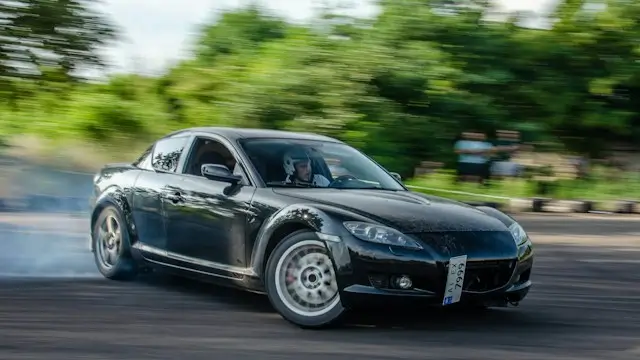
- Intentional loss of traction and control (burnouts, drifting, donuts, etc.)
- Attempting to lift the vehicle’s tires off the road (wheelies, skiing, etc.)
- Endangering other road users (brake checking, intentionally cutting someone off, blocking other vehicles from passing, etc.)
- Operating a vehicle while not sitting in the driver’s seat
The Criminal Code of Canada doesn’t actually use the phrase “stunt driving,” and most provinces separate stunts from street racing. If the offence is bad enough to result in criminal charges, it will likely be laid as a dangerous operation charge. If anyone is hurt or killed, that could escalate to a charge of operation causing bodily harm, or operation causing death.
If you’re charged with dangerous operation, the punishment depends on whether it’s a less-serious summary conviction, or a more-serious indictment:
- Summary conviction: up to $5,000 fine, 2 years less a day in prison, or both
- Indictment: up to 10 years imprisonment1
Many provinces also have additional administrative penalties (like licence demerit points) for drivers convicted of criminal offences.
It’s also the provinces that determine punishment for an offence that isn’t enough to be a criminal charge, from fines to licence suspensions.
Most offences associated with stunt driving result in provincial administrative penalties, not criminal charges.
Definitions and penalties by province
British Columbia
British Columbia’s Motor Vehicle Act doesn’t use the terms “stunt driving” or “street racing,” but does identify a “stunt” and “race.” Drivers who receive tickets for specific offences being committed during the race or stunt will have their vehicles impounded by police.
- A race means driving to outdistance one or more other vehicles, preventing another vehicle from passing, or driving at excessive speed to reach a destination before another vehicle.
- A stunt includes intentionally lifting tires off the road, losing traction while cornering, causing the vehicle to spin, driving in the oncoming lane longer than is necessary to overtake another vehicle, stopping or slowing to impede another vehicle, or driving too closely to another vehicle, pedestrian, or object.2
Someone caught in the course of a race or stunt can be charged under offences such as the following:
| Offence |
Description |
Demerit points |
Fine |
| Excessive speeding |
More than 40 km/h over the posted limit, with higher fines for 60 km/h over |
3 |
$368–$4833 |
| Careless driving |
Driving without due care and attention, or speed excessive for current conditions, or driving without reasonable consideration for other persons using the highway |
3–6 |
Minimum $167 |
| Dangerous driving |
Federal criminal charges like dangerous operation, etc. |
10 |
Determined by federal law / trial |
In addition to demerit points and fines, someone found to be participating in a race or stunt can have their vehicle impounded. A first offence is a seven-day impoundment. A second or third offence within two years brings a 30 or 60-day impoundment, respectively.
Impoundment includes towing, storage, and administration costs that you’ll have to pay. Those costs vary, but expect to pay more than $100 for towing, $32–80 per day for storage, and at least $55 in administration fees.4
Alberta
Alberta groups several dangerous driving behaviours together. These include racing, driving on a wager, stunting, and careless driving. Someone convicted of one of these offences would receive the following penalties:
- A $710 fine (plus 20% Victims of Crime Act surcharge, for a total of $852)5
- 3 demerit points for stunting; 6 demerit points for other offences6
Alberta’s Traffic Safety Act’s definition of stunting is to “perform or engage in any stunt or other activity that is likely to distract, startle or interfere with users of the highway.” Stunt charges aren’t just for the driver, either. A passenger can also face charges for such bad behaviour as hanging out the window, screaming at other drivers, or mooning someone. This also carries that $852 fine, but with no demerit points.7
Like most provinces, speeding is a separate offense unrelated to stunting. Speeding penalties escalate based on how fast the driver was going. The province’s standard speeding fines range from $105 to $744, depending on how far over the limit they are, up to 50 km/h over. But if someone is 51 km/h or more over the limit, it’s mandatory that they appear in court. How much they’ll owe for the fine is at the court’s discretion.
Saskatchewan
Saskatchewan’s Traffic Safety Act prohibits street racing, stunting in a motor vehicle, contests, and driving for wagers. Excessive speed is not part of this group of offences. Speeding is punished with escalating penalties that rise depending on several factors:
- how much the driver is over the speed limit
- if it’s in a school or highway work zone
- if they’re driving double the speed limit or more
- whether they’re exceeding what is considered safe and reasonable for the situation
A driver could receive a ticket, their licence could be suspended, or their vehicle could be impounded for doing any of the following:
- lifting tires off the road (including a motorcycle wheelie)
- losing traction while turning
- spinning or circling
- staying in an oncoming lane longer than needed to pass
- driving side by side to impede traffic
- carrying a person in the trunk
- driving while not seated in the driver’s seat or not in control
- blocking another vehicle from passing
- brake-checking or cutting another vehicle off
- driving as close as possible to another vehicle, a pedestrian or an object
- turning left to beat the oncoming driver off a green light8
Below are the penalties for stunt driving and speeding offences in Saskatchewan. Most offences also come with an immediate seven-day licence suspension and 30-day vehicle impoundment.
| Offence |
Description |
Demerit points9 |
Fine10 |
| Race or contest |
Driving in a race on a highway |
4 |
$580 for first offence, $1,400 for second, and $2,100 for third or more within 12 months |
| Performing a stunt |
See list above |
4 |
$580 |
| Bet or wager |
Driving on a bet or a wager |
4 |
$580 |
| Driving without due care and attention |
Operating the vehicle carelessly |
4 |
$580 for first offence, $1,400 for second, and $2,100 for third or more within 12 months |
Manitoba
Rather than stunt driving, Manitoba charges drivers with offences including driving carelessly, imprudent driving, or racing.
Driving carelessly includes driving without due care and attention, or without consideration for other people on the road. Imprudent driving means driving at a speed or in a manner that’s unreasonable for the conditions, including below the posted speed limit if conditions are considered bad enough. Manitoba defines a race as a contest of speed between two or more vehicles where there’s an indication of a common intention between the drivers to participate.
Police can also lay charges for such offences as making unnecessary noise or smoke, driving with an obstructed view, or improper equipment on the vehicle.
Careless driving and racing don’t necessarily come with roadside tickets — they require a court appearance before punishment is determined. In addition to the fines, a conviction may result in a one-year licence suspension.
Rather than adding demerit points, Manitoba uses a Driver Safety Rating (DSR) to determine how much a driver pays for insurance each year from Manitoba Public Insurance. Offences will decrease the rating, with a corresponding increase in insurance cost.
| Offence |
Description |
DSR level11 |
Fine12 |
| Careless driving |
Driving without due care and attention or reasonable consideration |
-5 |
Up to $5,000, plus court costs and victim surcharge |
| Racing |
Engaging in a race with another vehicle |
-10 |
Up to $5,000, plus court costs and victim surcharge |
| Driving imprudently |
Driving at an unreasonable speed, or a danger to others (even within the speed limit, depending on conditions) |
-2 |
$203 |
Related articles
Ontario
Ontario has the most detailed regulations regarding stunt driving, as well as some of the toughest penalties in North America. Racing, driving on a wager, and performing stunts are all prohibited under the province’s regulations. Ontario defines actual speed thresholds that constitute stunt driving, rather than just a general “excessive speeding.”
The definitions for each term are:
- A race or contest means two or more vehicles driven at a “marked departure from the lawful rate of speed” in a manner indicating competition. Chasing another vehicle, driving without due care and attention, or driving in a way that could endanger others can also help define a race.
- Ontario defines three forms of stunt driving:
- Maneuvers include driving in a manner that indicates an intention to lift tires off the road (including a motorcycle wheelie), to lose traction while turning, or to spin or circle the vehicle without keeping control; driving two or more vehicles side by side with one of them in the oncoming lane for longer than passing requires; driving with a person in the trunk; and driving while not sitting in the driver’s seat.
- Speed thresholds for stunt driving are 40 km/h over the limit (if the limit is less than 80 km/h), 50 km/h over the posted speed limit, or 150 km/h or more anywhere, including on highways with a posted speed limit of 110 km/h.
- Aggressive driving includes preventing another vehicle from passing, braking to interfere with another vehicle’s movement (brake checking), and driving as close as possible to another vehicle, pedestrian, or object without justification.13
Ontario’s penalties for racing or stunt driving are severe. Someone found committing these offences faces the following:
- A fine of at least $2,000 and up to $10,000
- An immediate 30-day licence suspension
- An immediate 14-day vehicle impoundment, whether it’s the driver’s vehicle or not
- Six licence demerit points
- If convicted, a licence suspension of:
- 1–3 years for the first conviction
- 3–10 years for the second conviction
- Lifetime, reduceable after 10 years, for the third conviction
- Lifetime, not reduceable, for the fourth conviction
- If convicted, a mandatory driver improvement course
- In some cases, a jail term of up to six months if convicted14
Following a vehicle impoundment, the owner will have to pay towing and storage costs as charged by the towing company.
Quebec
Quebec specifically prohibits racing and driving for a wager.
Street racing includes:
- “mistaking” streets, roads, and highways for a racetrack
- flooring the accelerator “and taking risks” to impress others
- betting on a race, or participating in it with or without a wager
- seriously endangering the lives of others.
The province doesn’t define stunts, but similar dangerous driving behaviours are prohibited under a provision that states: “any rate of speed or any action that can endanger human life and safety or property is prohibited.”15
Interestingly, Quebec also specifically forbids car surfing, which includes someone riding on the outside of a moving vehicle, or riding on anything being pulled by a moving vehicle — including skateboards, sleds, bicycles, and so on. The penalty is the same as that of street racing. And, if there are aggravating factors with racing or surfing, the person could face arrest and conviction.
The penalties for these offences are:
| Offence |
Description |
Demerit points16 |
Fine15 |
| Racing, wager or stake |
Engaging in a race with another vehicle |
12 |
$1,000–$3,000, plus court costs and mandatory contribution |
| Speeding or reckless driving |
Any prohibited speed or action |
4 |
$1,000–$3,000, plus court costs and mandatory contribution |
Racing also results in an immediate seven-day roadside licence suspension and vehicle impoundment. Both become 30 days if the driver was previously convicted of the same offence within the past 10 years. The offence remains on the driver’s record for 10 years, and the cost of the driver’s licence increases based on the demerit points on record.
An impoundment comes with additional towing and storage fees:
- Towing fee: $113.60 for the first 30 minutes + $23.22 for each 15 minutes spent at the towing site + $3.79 per km over 10 km
- Impoundment fee: $15 / day17
Fines in Quebec have two fees added on top when you pay them — court costs and a mandatory contribution to victims of crime and access to justice funds.
- Court costs: the amount escalates based on the amount of the fine. Add $343 if the fine is between $600 and $1,500; add 25% of the fine amount if the fine is greater than $1,500.18
- Mandatory contribution: 25% of the fine amount if it exceeds $500.19