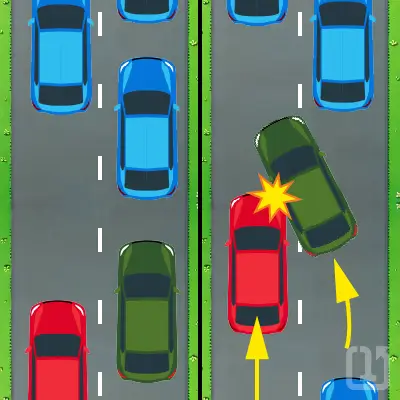
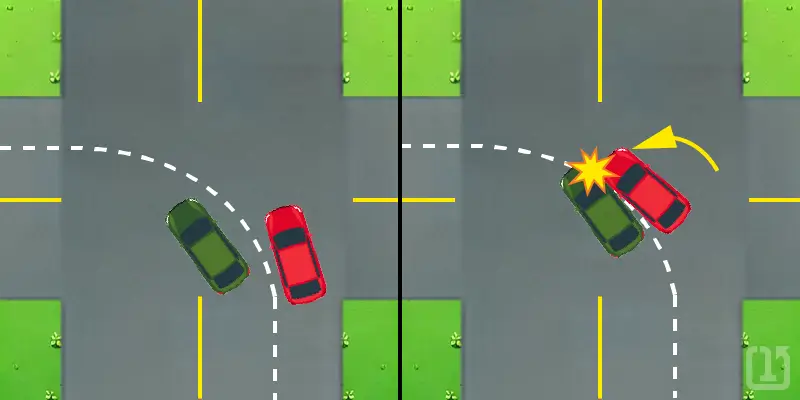
What to do if you’ve been involved in a collision
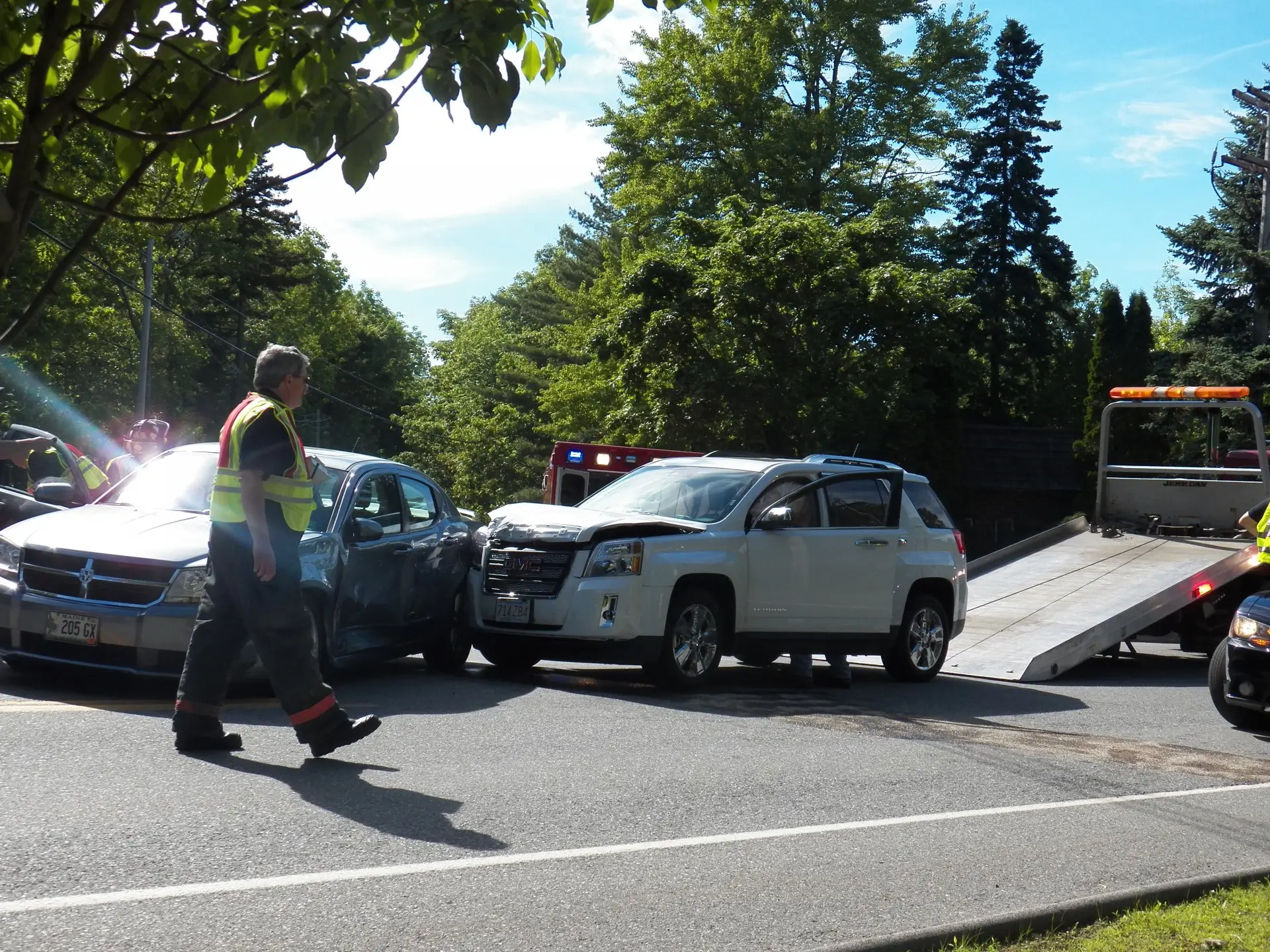
If you suspect you’ve been targeted by a staged collision, start by following the steps you’d usually follow after a vehicle accident: check for injuries and prioritize the safety of yourself and everyone else involved.
Then, if you suspect a staged collision, follow these steps:
1. Report the incident
If you suspect any foul play, don’t hesitate to call the police.
You must always report a collision to police if anyone is injured. In Ontario, you’re also required to call the police if it appears that there’s at least $5,000 worth of damage to the involved vehicles.6
You also should call the police in the event of a hit-and-run, or if you suspect criminal behaviour like impaired driving or, yes, a staged collision.
2. Collect detailed information
After any collision, document as much as possible. Take photos of the vehicles and the scene. Write down details about each involved driver: driver’s licence numbers, insurance information, and licence plate numbers.
Take note of the number of drivers and passengers involved, and the descriptions of each. Some staged collision scams will try to add people to their stories later. Note everyone’s behaviour, particularly regarding injuries.
If there are witnesses, get their contact information as well. But be wary — many staged accidents involve their own witnesses to corroborate the scammers’ fake story.
Record as much detail as you can about the incident while it’s fresh in your mind. That includes details about how the collision occurred, as well as weather and road conditions and anything else you think might be relevant later.
3. Be wary of referrals
Some staged collision scams involve tow trucks, body shops, or even lawyers. If anyone at the scene refers you to any of these services, be extremely cautious.
Rather than taking their recommendation, you should speak with your car insurance provider as soon as possible. They will help you arrange for towing, repairs, and other services from trusted providers.
And, note any attempted referrals and report them to your claims adjuster.7
4. Be careful about who you speak with
For the most part, you should speak only with the police or representatives of your insurance provider. Let them know if you have any suspicions about the incident.
You do want to collect information from others involved in the accident, but only if they’re cooperative. Don’t bother arguing with others at the scene, and certainly don’t admit any wrongdoing.
Some scammers will ask you to pay them cash to avoid reporting the crash to your (or their) insurer. Don’t accept — it’s your responsibility to report all collisions to your insurer. You don’t necessarily have to proceed with a claim, but you do have to inform them.
Insurance considerations
The car insurance aspect of a staged collision can be complicated. After all, the scammers are often trying to commit insurance fraud.
Your car insurance policy will still function like normal if you’re the victim of a staged collision. Coverage for injuries and related costs (called accident benefits) will always be available.
Coverage for damage to the vehicle gets a little more complex. It depends on whether the scammers are successful in their deception or not. This is why it’s important to document the incident thoroughly — no one wants to see criminals succeed.
- If it can’t be proven that the collision was staged, fault for the accident may be assigned to the victim (depending on the details of the collision). In this case, the victim would need collision coverage to cover the damage to their vehicle.
- If it is proven that the collision was staged, the regular rules for determining accident fault wouldn’t apply. Instead, since the scammer committed a crime, the regular legal process would decide penalties and restitution.1 However, since the victim wasn’t at fault in this case, their DCPD coverage (in Ontario) or DCA coverage (in Quebec) would cover repairs to their car. That’s just one reason why it’s highly recommended that drivers include DCPD or DCA coverage on their car insurance policies.
In any case, it’s essential to report a collision to your insurance provider as soon as possible. Your adjuster will explain your coverage options and guide you through the process.
Commonly asked questions
What are the consequences of staging a collision?
The punishment for staging a vehicle collision depends on the situation. If the perpetrator was trying to commit car insurance fraud, for example, the punishment is up to two years in prison for fraud under $5,000 and up to 14 years for fraud over $5,000.8
Regardless of any fraud, intentionally causing a vehicle crash may result in additional convictions. Dangerous operation, aggravated assault, and many other hybrid or indictable offences are possible.
How do you prevent insurance fraud after a collision?
For your part, all you have to do to avoid committing insurance fraud is to be honest. When speaking with your insurance adjuster, answer their questions completely and honestly.
After a collision, speak only with the police or with your insurer, unless you’re simply collecting information from others involved. Vigilance is key — document the accident thoroughly, don’t sign any blank forms or forms you don’t understand, and report any suspicious behaviour.
How do you report car insurance fraud?
Fraud, including insurance fraud, is a crime. Accordingly, you can report it to the police or anonymously to Crime Stoppers.
In the case of a suspected staged collision, you should also inform your insurance adjuster. They’ll be able to help you navigate the situation.
Sources
- Insurance Act. “R.R.O. 1990, Reg. 668: Fault Determination Rules.” Government of Ontario, www.ontario.ca/laws/regulation/900668. Accessed 30 December 2025.
- Insurance Corporation of British Columbia. “Crash while reversing from a parking spot.” icbc.com, www.icbc.com/claims/crash-responsibility-fault/crash-examples/Reversing-from-parking-spot-crash. Accessed 30 December 2025.
- Groupement des assureurs automobiles. “Identifying your loss.” gaa.qc.ca, gaa.qc.ca/en/direct-compensation-agreement/identifying-your-loss/stage-4-case-4/. Accessed 30 December 2025.
- Insurance Corporation of British Columbia. “Speed.” icbc.com, www.icbc.com/road-safety/crashes-happen/speed. Accessed 30 December 2025.
- Insurance Corporation of British Columbia. “Parking lot safety.” icbc.com, www.icbc.com/road-safety/crashes-happen/parking-lot-safety. Accessed 30 December 2025.
- Highway Traffic Act. “R.R.O. 1990, Reg. 596, s 11.” Government of Ontario, canlii.ca/t/tjq#sec11. Accessed on 30 December 2025.
- Financial Services Commission of Ontario. “Staged Auto Accidents: Protect Yourself from this Fraud.” fsrao.ca, 28 February 2017, www.fsrao.ca/media/7521/download.
- Criminal Code of Canada. “R.S.C. 1985, c. C-46.” laws-lois.justice.gc.ca, laws-lois.justice.gc.ca/eng/acts/c-46/section-380.html. Accessed 30 December 2025.
Want to learn more? Visit our Car insurance resource centre for dozens of helpful articles. Or, get an online car insurance quote in under 5 minutes and find out how affordable personalized coverage can be.
About the expert: Sunny Dhiman
Sunny has been with Square One since 2017, and presently holds the title of Call Centre Manager. Sunny is responsible for training and coaching new and existing employees. He also advises on complex underwriting, quote, or policy related matters. Sunny has a level 2 general insurance licence in BC, Alberta, Manitoba, and Saskatchewan. He has an OTL licence in Ontario and an AMF licence in Quebec. Sunny is also working on CAIB and CIP designations.