The important points
- Vehicle use is one of the factors insurers use to set your premiums and decide whether to insure you.
- Pleasure-use policies usually cost less than commuting policies; longer or more frequent commutes generally mean higher premiums.
- You must tell your insurer if the way you use your car changes, or you could put your coverage at risk when you make a claim.
Why does vehicle use matter in insurance?
Vehicle use, also called primary use or rate class, is one of many factors used to determine drivers’ insurance prices and eligibility. When you apply for car insurance, you’ll be asked a handful of questions about the vehicle and how it’s used.
Usage information tells insurers a great deal about the risk they’re insuring. For this assessment, they’ll want to know:
- How much do you drive the vehicle? More time on the road means more chances of getting into an accident. Even if you’re the safest driver out there, driving more only makes it more likely that you’ll find yourself at the mercy of someone else’s mistakes.
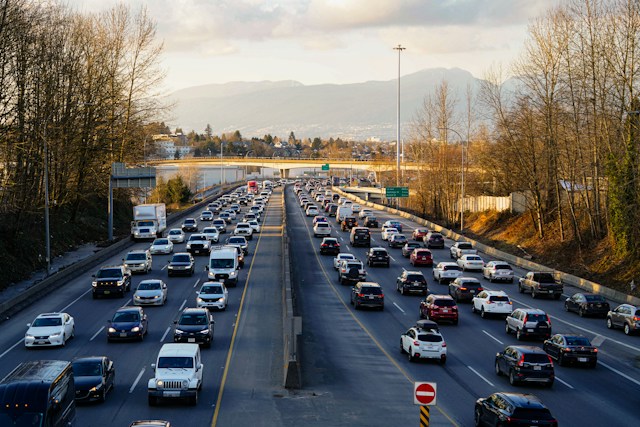
- What do you drive the vehicle for? Some uses put the driver in riskier situations. A daily driver that’s regularly exposed to rush hour and stop-and-go traffic is more prone to accidents than a car that only leaves the driveway on weekends. Similarly, driving on your own schedule isn’t the same risk as putting in long, continuous hours on a ride-hailing app.
Everyone’s driving needs are different, so it pays to find a policy that fits the way you drive. For the typical everyday vehicle, a traditional car insurance policy is usually all you need. But some limited-use or exotic vehicles may require other, more specialized products — not all providers offer classic car insurance, for example.
Vehicle uses that increase a driver’s overall risk often result in higher premiums. Some uses can even impact one’s eligibility for insurance, depending on the insurer’s risk tolerance.
Outside telematics-based programs (wherein drivers’ insurance prices are influenced by their actual driving habits), insurers don’t have direct methods to monitor when and where someone drives their car. Instead, they rely on broad definitions of usage.
Vehicle use classifications
In Canada, there are four main vehicle use categories for private passenger vehicles:
- Pleasure use: the vehicle is driven primarily for personal and recreational purposes, with no regular trips to a fixed workplace or school.
- Commuting use: the vehicle is driven on a regular basis to and from a fixed destination such as work, school, or a transit stop that forms part of the commute.
- Business use: the vehicle is driven as part of one’s occupation rather than simply to and from a single workplace.
- Commercial use: the vehicle is used to carry goods or passengers for compensation, or is driven as part of a business’s operations.
Each category comes with its own usage restrictions. However, they’re not defined the same everywhere.
In the public auto insurance markets (British Columbia, Manitoba, and Saskatchewan), the government insurer sets the rating rules. Elsewhere, private insurers establish their own rules, subject to regulatory approval. For example, providers in Ontario must get approval from the Financial Services Regulatory Authority of Ontario (FSRA) when they file their rates.1
For the purposes of this article, we’re mostly going to focus on pleasure use and commuting — the primary uses most drivers find themselves deciding between.
Pleasure use
Pleasure use describes a vehicle that’s mainly driven for personal and leisure purposes.
Unlike commuting (which we’ll cover next), pleasure driving isn’t fixed to a job or school schedule. Some pleasure-use policies, though, allow for the odd commute (or incidental commuting). For example, Square One’s pleasure-use class allows up to 25 commutes a year.
Of the four rating classes, pleasure-use vehicles tend to spend the least time on the road. They’re usually the cheapest to insure, but that doesn’t automatically guarantee low premiums — insurers weigh dozens of other factors when calculating your car insurance rates.
Typical pleasure-use driving includes:
- Grocery runs, appointments, and other errands
- Driving children to extracurricular activities and events
- Visiting friends and family
- Weekend trips and road trips
- Recreational driving
Under ICBC’s pleasure rate class, you can use a pleasure-use vehicle for up to six days in a calendar month for commuting, business, or delivery.2
In Manitoba, MPI distinguishes between “pleasure vehicles” and “all-purpose vehicles”. Pleasure vehicles can be used for commuting purposes up to four days a month or 1,609 kilometres in a year. All-purpose vehicles can be used without the commuting limits that apply to pleasure vehicles.3
Commuting use
Commuting use applies to vehicles that regularly travel to and from a fixed location, in addition to basic pleasure driving.
Unlike pleasure use, this class relies on a predictable driving schedule. The classic pattern is a car that leaves in the morning, parks somewhere all day, and returns in the evening.
Examples of commuting use include:
- Driving to an office, warehouse, or job site five days a week
- Driving to a campus where you are enrolled as a student
- Driving to a park-and-ride lot and completing the remaining distance by transit
When it comes to measuring commutes, there’s no standardized approach. Some insurers use broad one-way distance bands like commuting “4 km or less,” “5 to 9 km,” “10 to 14 km,” and so on. However, the bands themselves differ from provider to provider. Generally, the shorter the commuting distance, the lower the premium tends to be.
Commuting differs from business and commercial use in that commuting means you’re driving to work, not for work.
Pleasure use vs. commuting use comparison
To summarize, here’s a quick table comparing the two vehicle use classes.
|
Pleasure use |
Commuting use |
| Who it suits |
Low-mileage drivers, remote workers, retirees, stay-at-home parents, full-transit commuters. |
On-site and shift workers, students who drive to campus, and park-and-ride users. |
| Driving pattern |
Trips are irregular and depend on the driver’s personal plans rather than a set schedule. |
Trips follow a predictable routine, usually with the vehicle parked at one location for much of the day. |
| Typical use |
Errands, appointments, social visits, and recreational or long-distance travel. |
All of the typical pleasure-use trips, plus regular travel to a job, school, or transit connection. |
| Relative cost |
Usually the lowest-priced category, though the savings over commuting use can be modest. |
Typically higher than pleasure use, and generally increases with commute distance and frequency. |
| Commuting allowance |
Occasional commuting is sometimes permitted within set limits. |
Regular commuting is permitted without a frequency limit. |
Related articles