Common used car scams and how to avoid them

Written by Ziyad Bakkali

Reviewed by Jil McIntosh

Updated August 19, 2026 | Published July 31, 2026

You’ve finally found the perfect used car — great price, good condition, and a trustworthy seller. Everything checks out, or at least looks like it does. But used car fraud is real, it’s common, and it’s getting harder to spot.

Just about anyone can fall victim to scams if they don’t know what to look for. Common scams targeting buyers include bait-and-switch, curbsiding, odometer fraud, title washing, and various types of online fraud. But sellers aren’t immune either — buyers can run scams, too.

In this article, we’ll break down the most common used car scams targeting Canadians, including who’s most at risk, and what you can do to protect yourself.

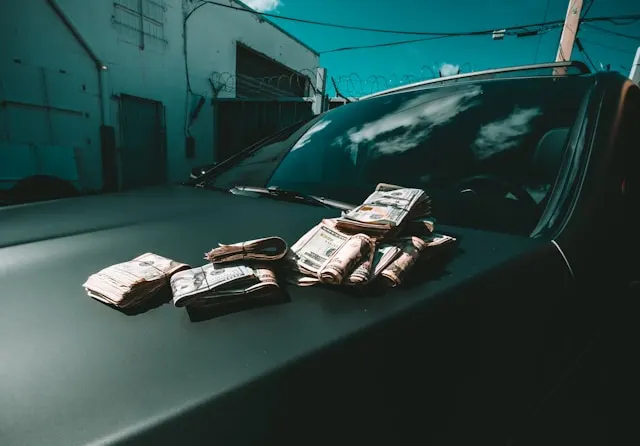
Bundles of cash piled on a matte black hood of a car outside a razor-wire-fenced building

The important points

  • Used car scams are deliberate attempts to profit from a vehicle sale through deception. Both buyers and sellers can fall victims to such scams.
  • The scams can take many forms, but they generally involve misrepresenting the vehicle, the payment, or the person on the other side of the sale.
  • Doing your due diligence before any money or keys change hands is the best way to avoid being scammed.

Who is most vulnerable to used car scams?

Generally speaking, anyone can fall for a used car scam. But some people are more likely to be victimized than others:

  • First-time (or young) buyers. Unless they’re with someone experienced, someone buying their first car might not know what questions to ask, which documents to request, or what a fair price looks like. They’re typically only focused on finding something they can afford, and that’s usually their main (if not only) priority.
  • Deal-chasing buyers. Many people chase deals that are too good to be true. They wouldn’t hesitate to buy a Range Rover listed well below market value, for example, if it means they get to own a high-end model. They may overlook minor or even substantial issues to get into that premium vehicle.
  • Distant buyers. Online shopping is rampant nowadays, including for cars. As with any online purchase, you’d expect things to arrive as advertised. But with cars, that assumption can be costly. Flattering camera angles, exaggerated features, and creative descriptions are all tactics one could use to hide serious problems. It’s even possible some of the pictures you see online could be AI-generated, and not the actual car you want to buy. In the worst cases, they could even trick you into buying a stolen vehicle.

Regardless of who’s targeted, vehicle scams are unlawful and can carry serious penalties for those who are caught. The best protection, however, is knowing what to look for before you get involved in negotiations.

Scams are punishable by law in all forms, including used car scams.

Scams targeting buyers

Bait-and-switch

A bait-and-switch occurs when a seller advertises a low-priced vehicle (the bait), then pivots to a higher price when the buyer goes to purchase it (the switch). This type of scam is most common with dealers, who have multiple cars on their lot. Sometimes, the ‘switch’ may even involve an entirely different vehicle.

Bait-and-switch tactics can vary, but the goal is always the same: to capture your interest with an attractive offer, then push you toward a more expensive deal. For example, the dealer may claim someone else bought the car just before you arrived and try to steer you toward a pricier model. Or they’ll actually bring out the advertised vehicle, but pile on new conditions and fees at the last minute.

Either way, the dealer always comes out ahead financially.

Curbsiding

A curbsider is an unlicensed dealer who poses as a private seller.1 They may look like any ordinary person selling their car, but they’re often part of larger operations that buy and resell cars for profit.

Curbsiders usually don’t register the vehicles they sell. They actually buy them in bulk and resell them at a markup. The curbsider may put up several vehicles for sale online at once, or display one in their driveway and replace it with the next vehicle as each is sold.

However, many of these vehicles are previous write-offs with undisclosed accident repairs. They may also include odometer-tampered, reVINned (meaning it has a vehicle identification number from another vehicle), stolen, or even defective cars. Of course, buyers are generally unaware of these problems at the time of purchase.

Curbsiding can occur anywhere, but it is mostly present in Ontario. The Ontario Motor Vehicle Industry Council (OMVIC) estimates that 25% of private vehicle listings posted online are by curbsiders.2 In a separate finding, over 90% of suspected curbsiders advertised on marketplaces like Kijiji.3

Odometer fraud

Odometer fraud refers to any attempt to manipulate a vehicle’s odometer so that it appears to have driven less than it actually has. Since vehicles depreciate rapidly with age and use, reducing the recorded mileage is a relatively simple way to misrepresent their condition and value.

Odometer tampering can take several forms, including:

  • Connecting to the on-board diagnostics system to rewrite the vehicle’s mileage data
  • Installing a device behind the speedometer to stop or slow down the recording of kilometres while the car is being driven
  • Swapping a high-mileage instrument cluster with a lower-mileage unit
  • Physically disassembling the odometer and rolling back the numbers manually (though this method only applies to older vehicles with analog or mechanical odometers)

Because lower mileage generally signals better overall condition, sellers can command significantly higher prices. For example, they could shave off 30,000 to 40,000 kilometres and justify a several-thousand-dollar price increase.

Meanwhile, buyers of these vehicles can incur higher-than-expected maintenance and repair costs.

Odometer fraud penalties can include fines and jail time — a Toronto-area dealer was sentenced to 450 days in prison for rolling back odometers on multiple vehicles.4

Another category of used-car scams involves vehicle identification numbers (or VINs).

The most serious of these is VIN fraud (also known as VIN cloning or reVINning), which is essentially identity theft for vehicles. Criminals take a stolen or salvage-repaired car and swap out its VIN with a counterfeit one, typically copied from a similar, clean-titled vehicle. The vehicle with a negative history now suddenly has a cleaner history, and becomes sellable to an unsuspecting customer.

Alberta and Ontario are known hotspots for this type of fraud.5

Perhaps more surprising is the scam tied to VIN etching — an otherwise legitimate anti-theft measure that involves inscribing the VIN on the vehicle’s windows and other surfaces or components. It can help deter catalytic converter theft, for example.

The problem isn’t VIN etching itself, but the deception around it. Dealers will sometimes present etching as mandatory, describing it as a government requirement or a condition of financing, but it’s not. No federal or provincial law requires VIN etching on vehicles. It’s a nice-to-have, not a must-have. The $200 to $500 dealers charge for etching is purely for the privilege.

Title washing

Title washing involves falsifying a vehicle’s damage history to hide serious problems from buyers. In most cases, fraudsters do this by removing or altering the vehicle’s ‘brand’ — a vehicle designation determined by the government to help protect consumers.

In Canada, there are three officially recognized brands for damaged vehicles: rebuilt, salvage, and irreparable (or non-repairable).6 Stolen vehicles may or may not be branded as such, depending on the province.

Vehicles branded as salvage, stolen, or irreparable cannot be registered for use on the road. If you unknowingly buy one of these, you won’t be able to plate and drive it until it’s been repaired (if that’s possible) and recertified as rebuilt. A clean title simply means the vehicle has no other official brands attached to it; it doesn’t necessarily mean it’s damage-free.

The classic scheme years ago involved moving a damaged or stolen vehicle from one province (or country) to another province and re-registering it there. This was at a time when provinces had no way to cross-check whether VINs existed in other provinces, so it was surprisingly easy to pull off.

To combat this, the Canadian Council of Motor Transport Administrators (CCMTA) eventually launched the Interprovincial Record Exchange program. This system allows Canadian jurisdictions to access information on any vehicle imported from other Canadian and U.S. jurisdictions.

Nevertheless, title-washed vehicles from years past can still turn up on the market, so be wary.

Negative equity

Negative equity, also known as the loan being ‘underwater,’ means that you owe more on your vehicle than what it’s worth on the market. That’s not an issue in itself, but it can be when you’re trading in that vehicle for a new one, and you need to move the financing over.

An unscrupulous dealer can potentially use your negative equity in a scam when you’re trading in your current car. Although it may sound like they’re clearing your debt on your current car, they’re actually adding more to the financing on the one you’re buying.

Fraudsters can pull this off in many ways:

  • They carry over the remaining balance into the new loan by ‘hiding’ it in the new financing, so you’re potentially paying even more interest on it
  • They disguise the rollover as additional fees, a higher sticker price on the vehicle you’re buying, or a stretched-out loan term — basically anything to make your monthly payments look reasonable
  • They mark up the new vehicle well above its actual value, counting on you to assume that it’s the actual cost
  • They force add-ons that can help offset the negative equity, like GAP insurance

For first-time buyers, especially, these tricks can easily go unnoticed.

Yo-yo financing

Yo-yo financing is a scheme used by some unscrupulous dealers to pressure buyers into accepting financing terms that are worse than what they originally agreed to.7

Basically, you finance a car, sign the paperwork, and drive home feeling good about your new purchase. A few days later, the dealer calls to say the financing fell through, and that you’ll need to return the car or sign a new agreement. Those new terms are almost always worse — a higher interest rate, a larger down payment, a longer loan period, or some combination of all three.

The dealer is counting on the fact that after a few days of ownership, many buyers have already become attached to their car. The last thing they’d want is to return it, or start searching for another car all over again. It could be embarrassing to suddenly lose your new car, and maybe you’ve even sold your old one, and you don’t have anything else to drive.

Dealers who pull off yo-yo scams rely on what’s known as a spot delivery. This is when a dealer gives you the keys before a lender has formally approved your loan, or sometimes before they’ve even found a lender. The contract is often written with conditions that allow the dealer to bring you back and renegotiate if the financing can’t be finalized. That’s why it’s called ‘yo-yo’ financing — the buyer is pulled back and forth between keeping and returning the vehicle.

Related articles
It only takes 5 minutes

ready for an online quote? Your time matters, and so does your stuff. Get a personalized home insurance quote in 5 minutes. That’s less time than it takes to wait in line for coffee.

Before you start, please review our Privacy Policy and Terms of Use.

Scams targeting sellers

Car sellers aren’t the only ones doing the scamming. They can get scammed too by people posing as customers for the car.

Payment fraud

One of the more straightforward buyer scams involves payment fraud. This can take many forms, but the two most common in car sales are cheque fraud and wire transfer fraud.

Like most payment-related scams, wire fraud relies on criminals forging electronic confirmations to make it appear as though they’ve transferred the funds for the vehicle. Those who fall victim often end up handing over their car before realizing the money never changed hands. Cheque fraud is similar, but relies on manipulating physical cheques instead.

In 2024, a BC man listed his car for sale, accepted what appeared to be a legitimate bank draft, and gave the buyer the keys. When he later tried to deposit the cheque, the bank informed him that it was counterfeit. By the time police recovered the vehicle, it had already been stripped for parts. And since he’d willingly transferred the car, ICBC couldn’t cover the loss.8

Fraudsters have also been known to use counterfeit money orders, fabricated e-transfer confirmations, and altered bank statements to convince sellers they’ve been paid.

Fake escrow services

In car sales, an escrow service acts as a financial middleman. It’s an independent third party that holds funds and releases them only after both parties have met their agreed-upon conditions.

Often, sellers are the ones behind escrow scams. However, buyers can perpetrate them as well. In either case, one party typically controls the escrow provider or has undisclosed ties to it, meaning any funds deposited go directly into the scammer’s pockets.

When they succeed, it’s largely because victims don’t verify the escrow provider before sending their money. Scammers often use sophisticated websites, realistic payment confirmations, and other convincing details to make the service appear legitimate. In reality, though, the escrow service is fake and offers no financial protection whatsoever.

In practice, a fake buyer might demonstrate that they’ve got the payment safely held in escrow, then vanish after taking possession of the vehicle. Alternatively, a fake seller may advertise an irresistible car offer and collect an upfront escrow payment, but never actually deliver the car.

This scam is especially common in high-dollar private sales, where buyers and sellers don’t have the same built-in protections that often come with dealer-type transactions.

Identity fraud

In some situations, car sales can be a gateway for committing identity fraud.

In identity-related schemes, someone poses as an interested buyer and tries to somehow obtain the seller’s personal information. One common tactic is to ask the seller to purchase a vehicle history report from a fraudulent website — one that looks completely legitimate but is secretly controlled by the scammer.

“They would say, ‘That’s not detailed enough. Carfax isn’t the one I depend on, can you please go to this website and purchase the one that I trust?'”, Ellen Thompson told CBC.9

Once they have what they need, they can exploit the stolen identity in several ways:10

  • Opening new lines of credit or loans in the victim’s name
  • Taking over existing bank or investment accounts
  • Applying for government benefits or identification documents
  • Selling the stolen data to other bad actors on the dark web

How to protect yourself against used car scams

Whether you’re buying or selling, there are basic precautions you can take to avoid getting caught in a scam.

  • When buying a used car, get a pre-purchase inspection done by a trustworthy mechanic; they can uncover mechanical issues that may have been purposely undisclosed.
  • Get vehicle history reports from trusted sources, like Carfax or official government websites. Pull these yourself if you can, especially when dealing with private sellers. Make sure the VIN exactly matches what’s on the official records.
  • Confirm whoever you’re dealing with is who they say they are; they should have verifiable identification. Sellers should be able to prove ownership and registration of their vehicle(s).
  • Use secure, traceable payment methods, and always confirm that whoever you’re paying receives the funds before handing over your vehicle. Don’t trust escrow services you haven’t researched thoroughly.
  • As legitimate as they may seem, never enter personal or financial details on unsolicited sites, particularly those sent by strangers. Check out our guide about safeguarding your identity.
  • Be cautious of pressure tactics designed to squeeze more money out of you, directly or indirectly. If there are last-minute changes to pricing, fees, or financing terms, consider it a red flag.
  • Trust your instincts. Sometimes your gut will tell you if something fishy is going on. You’ll always find comparable deals elsewhere, but you can’t undo a scam.
  • When selling a vehicle, don’t hand over the keys until the buyer has registered it in their name and shown you proof of the new ownership. Even if you trust the buyer, they might take their time making the change. As long as the vehicle is still in your name, you’re responsible for anything that happens to it, potentially including crash damage, insurance claims, or parking or automated tickets.

Commonly asked questions

What should I do if I’ve been scammed?

If you suspect you’ve been scammed, the first step is to document everything. Gather all exchanges with the scammer, including screenshots of the ad listing and any text or email conversations. Then, report the crime to the police and the Canadian Anti-Fraud Centre so they can investigate.

Provinces also have bodies that regulate licensed dealerships, through which victims may pursue legal action. However, they generally don’t intervene in private disputes, as those are considered voluntary agreements between two parties. In private sale cases, it’s best to consult a lawyer.

If you suspect payment fraud or compromised banking information, contact your bank or credit card provider immediately. Depending on the timing and payment method, they may be able to freeze, reverse, or dispute the transaction.

Is it safer to buy a used car from a dealership or a private seller?

Buying from a dealership is almost always the safer option. You may come across pricier options than in private sales, but at least you’ll have real recourse and consumer protection options if anything goes wrong.

Buying privately can be safe, but you’ll need to be confident you’re dealing with a trustworthy person. Be extra diligent with your checks, particularly when dealing with marketplace listings.

Whichever route you go, do some homework before you commit. Never buy a car blindly, no matter how tempting the price looks. And always, always ask for a test drive. If anything feels off during the negotiation process, proceed with caution.

Does insurance protect you against used car scams?

It depends on the scam.

Most scams involve financial losses arising from deception, which isn’t something insurance covers. Insurance is designed to help victims recover from things like injuries, theft, or vehicle damage.

That said, some scams do have insurance solutions. For example, identity theft. You can buy identity theft insurance from Square One, or your preferred provider if they offer it. These products typically only help with the recovery aspect of identity fraud, and only a few policies cover the actual financial losses arising from stolen funds or fraudulent purchases.

Sources

  1. Steps to Justice. “Ask Yourself if the Seller Is a Curbsider.” stepstojustice.ca, stepstojustice.ca/steps/debt-and-consumer-rights/ask-yourself-if-seller-curbsider. Accessed 28 July 2026.
  2. Automobile Protection Association. “If you buy cars privately beware of sellers who misrepresent themselves.” apa.ca, www.apa.ca/en/if-youre-buying-a-used-car-privately-beware-of-sellers-who-misrepresent-themselves. Accessed 28 July 2026.
  3. Used Car Dealers Association of Ontario. “Curbsider Research.” ucda.ca, 9 August 2023, www.ucda.ca/car-buying-tips/what-is-a-curbsider/curbsider-research.html.
  4. Mangione, Kendra. “Sales of vehicles with rolled-back odometers lead to lengthy jail sentence.” CTV News, 15 January 2026, www.ctvnews.ca/toronto/article/sales-of-vehicles-with-rolled-back-odometers-lead-to-lengthy-jail-sentence.
  5. Pearson, Mike. “Carfax is fighting back against auto theft with a VIN Fraud Check tool. Here’s how it works.” InsideHalton, 25 April 2025, www.insidehalton.com/news/auto-theft-fraud-carfax/article_9f0d1e9a-2521-53a1-8669-f49b9070e039.html.
  6. Insurance Bureau of Canada. “Branding.” ibc.ca, www.ibc.ca/industry-resources/insurance-data-tools/branding. Accessed 28 July 2026.
  7. Davis, Delvin. “Deal or No Deal: How Yo-Yo Scams Rig the Game Against Car Buyers.” SSRN, 4 April 2012, papers.ssrn.com/sol3/papers.cfm?abstract_id=2034541.
  8. Potenteau, Doug, and Victoria Femia. “Fake bank draft, trashed car: Private sale goes wrong for B.C. man.” Global News, 3 May 2024, globalnews.ca/news/10468911/bc-fake-bank-draft-trashed-car.
  9. Panico, Giacomo. “Selling your vehicle? Watch out for this scam growing in popularity.” CBC News, 16 November 2023, www.cbc.ca/news/canada/ottawa/vehicle-sale-scam-history-report-1.7028730.
  10. Royal Canadian Mounted Police. “Beware of phishing scam – vehicle history reports.” rcmp.ca, 1 August 2025, rcmp.ca/en/bc/ladysmith/news/2025/08/beware-phishing-scam-vehicle-history-reports.

Want to learn more? Visit our vehicle owner resource centre for dozens of helpful articles. Or, get an online car insurance quote in under 5 minutes and find out how affordable personalized coverage can be.

About the expert: Jil McIntosh

Jil McIntosh writes professionally about a variety of automotive subjects, and has contributed to such publications as Driving.ca, AutoTrader.ca, Automotive News Canada, Old Autos, Toronto Star Wheels, and more. A member of the Automobile Journalists Association of Canada (AJAC), she has won numerous awards for her writing, including Automotive Journalist of the Year.

Computer

Get a free quote

Get a personalized online home insurance quote in just 5 minutes and see how much money you can save by switching to Square One.

Get an online quote now

People

Protect your family

Even when you take precautions, accidents can happen. Home insurance is one way to protect your family against financial losses from accidents. And, home insurance can start from as little as $15/month.

Learn more

