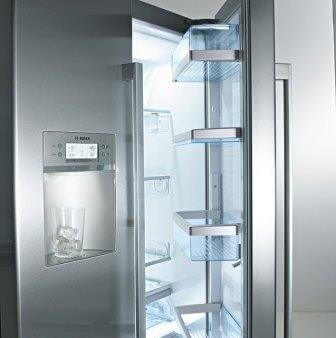
What can you do to maintain your refrigerator?
Here are some tips to properly maintain your fridge:
Clean the door seals
Sticky food can get on the seals around your fridge door. If the door sticks shut, and you pull it open, the seals can actually tear. Wipe down the seals every few months with a solution of warm water and baking soda, on a sponge or a toothbrush. This is a simple fix for a common problem.
Clean the condenser coils
Dusty condenser coils reduce the efficiency of the fridge. Clean them with the brush attachment on your vacuum cleaner. Depending on the type of fridge you have, the coils are either at the back of the fridge, in which case you’ll need to pull your fridge away from the wall, or at the bottom front of the fridge behind a snap off cover.
Check the temperature
The fridge should be set between 3 and 5 °C, and the freezer at about -18 °C. If you make any adjustments to the thermostat, give it about 24 hours to adjust. Buy a fridge thermometer to check the temperature. Stand the thermometer in a glass of water at night before bed. This way you can be sure that the fridge door will be closed for 8 hours. In the freezer, just stand the thermometer up between some frozen items, and leave it for 8 hours.
Clean the freezer vents
There are little vents at the top and bottom of the freezer section of your fridge, which can easily get plugged by bits of food, plastic, or twist ties. Keep these clean, so air can circulate properly.
Fill up your fridge
Your fridge should be about three-quarters full to operate properly. When you open the door, the cold foods inside will help absorb some of the warm air you’re letting in. If your fridge is too empty, put a few bottles of water inside.
What is the life expectancy?
The average life expectancy of a refrigerator ranges from 14 to 17 years, with compact fridges being significantly less, around 5 years. Proper cleaning and maintenance will prolong the lifespan.
6 tips to increase the life of your fridge
1. Keep the condenser coils clean
Clean the condenser coils twice a year. When dirt and dust build up on the coils, your refrigerator finds it harder to remove heat and uses more energy to do so.
Over the long term, dirty coils can damage the unit, so break out your vacuum cleaner and a long-handled bristle brush for cleaning. Unplug your refrigerator and clean it according to the instructions in your owner’s manual.
2. Create clearance
When placing the refrigerator/freezer in your kitchen, make sure there is enough space for air to circulate around the coils. If they are located at the back of the unit, leave 2.5 centimeters of space between coils and wall. If they are beneath the unit, space is not an issue.
3. Maintain gaskets
The gaskets are the rubber seals that circle your refrigerator and freezer doors. They keep warm air from entering the unit. Clean them periodically with an all-purpose cleaner. Gaskets do weaken over time and don’t seal properly, but are generally easy and inexpensive to replace, so keep an eye on them.
If they aren’t sealing well, your unit will consume more energy and your bills will increase.
4. Defrost
If your freezer isn’t a self-defrosting unit, you’ll need to get rid of the frost buildup yourself or the freezer won’t cool your food as efficiently and will use more energy. When a half-centimetre of frost builds up on the interior, unplug the unit or turn off the thermostat, remove the food and allow the frost to melt.
Wipe away the puddles, restart the unit and wait until it returns to its usual temperature before replacing the food.
If you have a self-defrosting unit, its cooling coils heat up every six to eight hours to melt frost accumulating on the coils. Although the water evaporates, you’ll still need to clean the pan beneath the refrigerator with a bit of detergent to prevent odors and bacteria from accumulating.
On many models, you can remove the lower grill and slide the pan out.
5. Load, but don’t overload
Keep your fridge and freezer about three-quarters full. They work best when they’re full, but not so full that air can’t circulate. Cold items keep each other cold and help maintain a steady temperature.
If your fridge or freezer has too much empty space, use large water bottles to fill in the gaps. If you freeze water bottles, ensure that they aren’t completely full so the ice has room to expand.
If you load the refrigerator to capacity, you may block the vents and require the motor and condenser to work harder than they should. This can result in damage, including a burnt-out motor.
Extra strain can also lead to higher energy bills since the unit will be working harder to cool its contents. In addition, if there is inadequate space for air to circulate, the items in your refrigerator won’t cool properly. This could damage the food you have stored, making it unsafe to eat.
6. Make sure it doesn’t run constantly
Constant running is a sign that your refrigerator may not be working properly. Check all of the obvious potential problems before calling a repair shop: space for proper airflow between coils and the wall and a proper gasket seal. Don’t ignore it – you’ll use more electricity than you should and eventually burn out the motor.
What will your home insurance provider want to know?
When you’re insuring your home, the fridge will be part of your personal property. When calculating the replacement cost of all of your belongings, be sure you include the cost of your refrigerator. The replacement cost can be high — remember, it’s the cost of buying a new, similar fridge in present-day dollars. If you’ve purchased a new condo, appliances may have been included. However, in the event of a loss, these appliances are generally not covered by the condominium association’s policy, but instead, need to be insured by your own condo policy.
Your home insurance provider needs an accurate figure of the value of your possessions in order to make sure you’ve got the coverage you need. So if you’ve got an expensive fridge, let your insurer know.
Want to learn more? Visit our Getting to Know Your Home resource centre for the complete rundown on all your home's systems and features. Or, get an online quote in under 5 minutes and find out how affordable personalized home insurance can be.
About the expert: Jason Plante
Jason Plante is the Operations Manager for Priority Appliance Service Ltd. Jason manages a team of dedicated staff and technicians. Prior to joining Priority, Jason Plante spent many years in logistics, process improvement, and data analytics, and helped build a successful financial technology company from 18 to over 200 employees, before being acquired by PayPal.